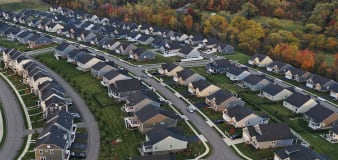
Sixty percent! Gah! Get out of the suburbs, and fast! The simple savings equation? Living in the city = less time and money spent on transportation. (SF residents: calculate your costs here. Others can calculate individual environmental footprint here.)So, while the cost to live in the city might seem more expensive on the front end due to more expensive rent, you may actually be saving money if you calculate the value of your time and vehicle transportation costs.
The Front Steps spells it out...
In regards to housing being "less expensive" outside of San Francisco (or any city):
"Housing that appears affordable based solely on housing costs may not be truly affordable when it is located far from transit, jobs and services," said Cisneros. "[The] report [.pdf] underscores the importance of broadening the understanding of housing affordability challenges to also include transportation costs, time and the environmental impacts of commuting."
As for the environmental impact, The Front Steps recaps as follows:
Fortunate enough not to be troubled with the hassles of owning a car? Earn some cash by renting the parking space that comes with your apartment.Bay Area Burden illustrates how densely developed urban counties like San Francisco are estimated to have substantially fewer vehicle miles traveled per household (19.4) and thus lower per-household carbon dioxide emissions (20.2) than do more rural and suburban counties such as Solano [...] Considering that less than one in ten (9.5%) Bay Area workers use public transit, compared with 26.5% in the New York Metropolitan area and 11.1% in the Washington DC region, these figures are even more compelling [and SAD!!!].
Find more earth-friendly news from Rented Spaces, here.