You Call That an Apt. Hunt? 4.5 Million Rentals Available in U.S.


Earlier this month new census data revealed that the homeownership rate is plummeting as foreclosures swell. That news buried the other bombshell in the latest numbers: vacancy rates are now soaring for rentals.

Nationally, 10.7 percent of apartments are now sitting empty. And in apartment buildings? Vacancies are over 13 percent. That's potentially great news for renters, since basic economics tells us that as supply grows and demand falls, prices will decline. But be careful what you wish for – if landlords are stuck with too many apartments, they may not be able to take very good care of yours. We haven't heard much about the latest numbers because they're a teeny fraction down from the hair-raising record 11.1 percent vacancy rate from last fall. But the decline is really just a statistical blip. Many cities are now setting records for empty apartments, and there's no sign of a slowdown.

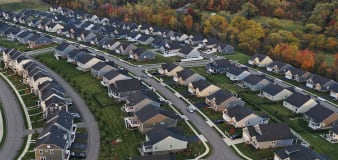
The high vacancy rates aren't just in places you might expect them, like Ohio and Michigan; the South is getting slammed especially hard, from Raleigh, NC (14 percent empty) to Memphis (24 percent). In Atlanta, nearly 17 percent of apartments are now vacant. In Louisville, it's more than 20 percent, Greensboro, NC, 18 percent. Heading for Disney World? Why not stay a year in Orlando, since almost one in four rentals there are now empty.

In some cities, like St. Louis and Tulsa, oceans of empty rentals are nothing new. That's because cheap, freely available mortgages sucked many tenants out of apartments and put them into homes to buy. But now huge gluts of apartments are becoming normal from Poughkeepsie (14 percent vacant) to Sacramento (13 percent).

You might ask, how could it be that the homeownership rate is going down and rentals remain empty by the millions? (To be exact: a record 4.5 million nationwide.) As families go into foreclosure, don't they have to go somewhere?

Well, yes. But where they're going, often, is moving in with other people they know. Young people graduating from college move back in with their folks instead of striking out on their own, or find a place with roommates even though they really wanted their own bachelor pads.

The upshot is that the U.S. has many fewer households in 2010 than anyone had expected – least of all the landlords who built or bought buildings expecting they'd be full. In 1996, the Census folks projected how many there would be this year and came up with 114.8 million. What we've actually ended up with is just 111.7 million households.

Good news for tenants, as rents continue to decline. For landlords and the investors who are backing them? A big disaster. Last week, the TARP Congressional Oversight Panel came out with a chilling report on the state of commercial real estate, which includes rental apartment buildings, predicting that some $1.4 trillion in debt will default. So renters, don't get too used to that heat and hot water.
 

Add Your Comments


Please keep your comments relevant to this blog entry.Email addresses are never displayed, but they are required to confirm your comments. When you enter your name and email address, you'll be sent a link to confirm your comment, and a password. To leave another comment, just use that password.


To create a live link, simply type the URL(including http://) or email address and we will make it a live link for you. You can put up to 3 URLs in your comments. Line breaks and paragraphs are automatically converted - no need to use <p> or <br> tags.

Poll

With spring home buying season around the corner, will you consider buying?
Yes. Affordability is at a 30-year high, and I should be able to qualify for a mortgage.3077 (20.4%)
No, but I would if I could. Lending in my area is still tight, and I don't have that kind of cash on hand for a down payment.5156 (34.1%)
No, I'm holding out for an even better deal.2856 (18.9%)
Nope. It's a renter's life for me.4013 (26.6%)
AOL RealEstate on Facebook