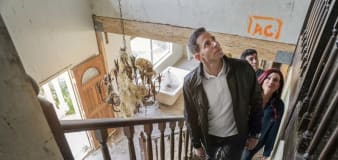
The future is here, and not a moment too soon. Tomorrow, Treasury Secretary Timothy Geithner and HUD Secretary Shaun Donovan, pictured left, will host a conference on the future of housing finance. Before you click away or fall asleep -- pay attention. What's at stake is nothing less than whether or not you -- or the buyer to whom you'll sell your house to one day -- will be able to get an affordable, long-term mortgage, no matter what the state of the economy.Fannie Mae has been guaranteeing this since 1938, Freddie Mac since 1970. Their original mission was to level out the ups and downs of mortgage lending by creating giant pools of money for home loans that banks could dip into whenever they needed it, whether those banks were flush with deposits or had hit a dry spell.
Of course, the Fannie and Freddie story has had a much-less-tidy ending, as deregulation led private competitors to undercut them with subprime lending – and Fannie and Freddie made a fatally bad decision: "If you can't beat 'em, join 'em." They're now both under government conservatorship.
Some critics, like former Federal Reserve Bank of St. Louis chief William Poole, have suggested that the United States doesn't need institutions like Fannie and Freddie anymore, because the private sector has now figured out how to turn mortgages into securities and sell those to investors.
We all know how well that worked out last time around.
But let's say that the Dodd-Frank financial reform bill will rein in the worst abuses of borrowers and investors, and will keep the mortgage banking of the future from imploding. Let's also assume that a healthy level of market discipline will prod investors in mortgage securities to make rational choices about their risks. Even then, what we're looking at with a purely private mortgage market would likely be big cycles of feast or famine for consumers seeking mortgages. Sometimes, too few funds would be available to borrowers, or on terms that were so conservative – big down payments, short duration of loans – that they'd put big financial burdens on borrowers. Then at other times, at the other extreme, plenty of funds might be available but mostly for the wrong kinds of loans – the very riskiest.
If widespread homeownership is going to be part of the American landscape, some force needs to be out there making sure that it is, while minimizing the risk to taxpayers that they'll get stuck holding a big bill. That's the agenda that Geithner and HUD Secretary Donovan have already put out there, testifying to Congress this spring. Now the secretaries are putting on their own show to air different points of view on that idea.