<?xml version="1.0"?>
<rss version="2.0" xmlns:dc="http://purl.org/dc/elements/1.1/">
<channel>
<title>AOL Real Estate - Blog</title>
<link>http://realestate.aol.com/blog</link>
<description>AOL Real Estate - Blog</description>
<image>
<url>http://realestate.aol.com/blog/media/feedlogo.gif</url>
<title>AOL Real Estate - Blog</title>
<link>http://realestate.aol.com/blog</link>
</image>
<language>en-us</language>
<copyright>Copyright 2012 Weblogs, Inc. The contents of this feed are available for non-commercial use only.</copyright>
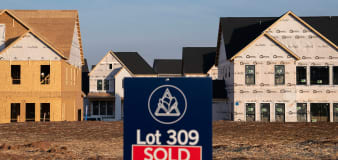
<generator>Blogsmith http://www.blogsmith.com/</generator><item><title>Viewpoint: Why No New Houses May Be a Good Thing</title><link>http://realestate.aol.com/blog/2011/09/21/viewpoint-why-no-new-houses-may-be-a-good-thing/</link><guid isPermaLink="true">http://realestate.aol.com/blog/2011/09/21/viewpoint-why-no-new-houses-may-be-a-good-thing/</guid><comments>http://realestate.aol.com/blog/2011/09/21/viewpoint-why-no-new-houses-may-be-a-good-thing/#comments</comments><description><![CDATA[<p>Filed under: <a href="http://realestate.aol.com/blog/category/news/" rel="tag">News</a>, <a href="http://realestate.aol.com/blog/category/economy/" rel="tag">Economy</a>, <a href="http://realestate.aol.com/blog/category/foreclosures/" rel="tag">Foreclosures</a>, <a href="http://realestate.aol.com/blog/category/home-equity/" rel="tag">Home Equity</a>, <a href="http://realestate.aol.com/blog/category/selling/" rel="tag">Selling</a></p><img border="1" hspace="4" src="http://www.blogcdn.com/realestate.aol.com/blog/media/2011/09/gyi0056222481.jpg" vspace="4" /><br />
<br />
The news that <a href="http://www.reuters.com/article/2011/09/20/us-usa-economy-idUSTRE78C33C20110920">2011 may go down as the worst year in the past 50 for construction of new homes </a>brought out many a weeping violin. Sorry, the strings on mine must have popped.<br />
<br />
Yes, I understand that construction jobs -- the ones that are created when builders build new homes -- are a good thing for the economy. But the dark cloud of no new houses being built may have a silver lining: No new homes means less competition for existing homeowners trying to sell.<style type="text/css">
#mini_module { width: 265px; height:220px; border: none; float:left; margin:10px; font-size:12px;} #mini_module img {border:none; width: 265px; height:131px; border: none; margin:0px; } #mini_module .mini_title { margin: 0px; padding:0px; width:265px; height:131px;} #mini_module .mini_main { margin: 0px; padding:0px; width:265px; height:85px; background: transparent url(http://www.aolcdn.com/travel/bg-short)} #mini_module .mini_item {padding:12px 0px; margin: 0px 20px; border-bottom:1px dotted #CCCCCC;} #mini_module a { color: #49A3CA; text-decoration:none; } #mini_module a:hover { color: #F98419; text-decoration:underline;}</style>
<br />
<br />
Have we forgotten the economic rule of supply and demand? When the supply is smaller (no more new houses), the demand increases (for existing houses). When the demand increases -- especially coupled with record-low interest loans -- home values increase. Equity builds in existing homes, fewer people are upside down on their loans. People feel like they can spend again. Remember the old adage about land, how they aren't making any more of it? Now apply it to houses.<br />
<br />
<div id="mini_module">
	<div class="mini_title">
		<a href="http://realestate.aol.com/homes-for-sale" target="_blank"><img alt="Search Homes for Sale" src="http://www.aolcdn.com/travel/search_homes" /></a></div>
	<div class="mini_main">
		<div class="mini_item">
			<a href="http://realestate.aol.com/homes-for-sale" target="_blank">Browse through photos of millions of home listings</a> or <a href="http://realestate.aol.com/foreclosures" target="_blank">search foreclosure listings</a></div>
	</div>
</div>
Without the option of shiny new faucets and developers promising low-interest adjustable rate loans that got so many people in financial trouble in the first place, what exists of the homebuying public will be forced to focus its attention on the resale market. Surely with so many short sales and foreclosures out there -- not to mention desperate sellers who just need to move -- people can find something to their liking.<br />
<br />
And stimulating sales of the comatose existing-home market also is a job stimulant, albeit different jobs. It creates work for home inspectors, termite-treaters, appraisers, real estate agents and others in the home transaction pipeline.<br />
<br />
And what do new homeowners do if not immediately rush out to call contractors and remodelers? They visit Home Depot, shop for new couches and carpets, put in a swimming pool or refinish the kitchen cabinets. The first impulse of a new homeowner is to put their stamp on the house, making it theirs. Whether it's as simple as slapping up a new color of paint or putting up a ceiling fan, they spend money on their new baby. And that stimulates the economy.<br />
<br />
Don't believe me? In 2009, new homeowners (those who have owned for two years or less) spent an average of $10,465 on home improvements, compared to $8,532 spent by those who have owned longer, says a Joint Center for Housing Studies report.<br />
<br />
Inventory levels are flush in the resale market. Homes stay on the market for ages. Maybe the key to leaving the recession in our rear-view mirror has been in moving the excess housing market all along instead of worrying about how to create more of it.<br />
<br />
Your thoughts, readers?<br />
<br />
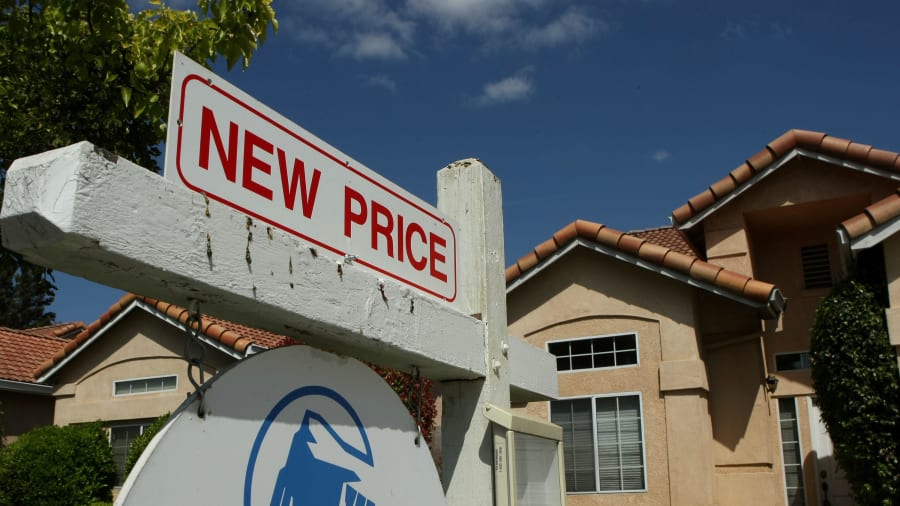
(The photo at top shows a housing development in Rio Vista, Calif., where work was halted in 2008.)<br />
<br />
<em><strong>Also see:</strong><a href="http://realestate.aol.com/blog/2011/09/15/viewpoint-whats-behind-banks-big-foreclosure-push/" target="_blank" title="View Viewpoint: What's Behind Banks' Big Foreclosure Push? on AOL Real Estate"><br />
Viewpoint: What's Behind Banks' Big Foreclosure Push? </a><a href="http://realestate.aol.com/blog/2011/09/09/viewpoint-hey-mr-president-how-about-housing/" target="_blank" title="View Viewpoint: Hey Mr. President, How About Housing? on AOL Real Estate"><br />
Viewpoint: Hey Mr. President, How About Housing?</a><a href="http://realestate.aol.com/blog/2011/09/17/million-dollar-foreclosures-just-bring-your-checkbook/" target="_blank" title="View Million-Dollar Foreclosures, Just Bring Your Checkbook on AOL Real Estate"><br />
Million-Dollar Foreclosures, Just Bring Your Checkbook </a></em><br />
<br />
<strong><em>More on AOL </em><span class="inlinked"><em><a class="inlinked" href="http://realestate.aol.com/">Real Estate</a></em></span></strong><em><strong>:</strong><br />
Find out how to </em><a class="inlinked" href="http://realestate.aol.com/mortgage-calculator?flv=1"><em>calculate mortgage</em></a><em> payments.<br />
Find </em><a class="inlinked" href="http://realestate.aol.com/homes-for-sale"><em>homes for sale </em><em>in your area</em></a><em>.<br />
Find </em><a class="inlinked" href="http://realestate.aol.com/foreclosures"><em>foreclosures </em><em>in your area</em></a><em>.<br />
</em><span style="font-style: italic;">Find <a href="http://realestate.aol.com/blog/rentals/" target="_blank">rentals in your area</a>.</span><p style="clear: both; padding: 8px 0 0 0; height: 2px; font-size: 1px; border: 0; margin: 0; padding: 0;">&nbsp;</p><p><a href="http://realestate.aol.com/blog/2011/09/21/viewpoint-why-no-new-houses-may-be-a-good-thing/" rel="bookmark" title="Permanent link to this entry">Permalink</a>&nbsp;|&nbsp;<a href="http://realestate.aol.com/blog/forward/20047607/" title="Send this entry to a friend via email">Email this</a>&nbsp;|&nbsp;<a href="http://realestate.aol.com/blog/2011/09/21/viewpoint-why-no-new-houses-may-be-a-good-thing/#comments" title="View reader comments on this entry">Comments</a></p>]]></description><category>existing home sales</category><category>Home Depot</category><category>home improvements</category><category>new home building</category><category>new home sales</category><dc:creator>Ann Brenoff</dc:creator><dc:date>2011-09-21T08:45:00+00:00</dc:date></item><item><title>Foreclosure Victims Plan Protests Across U.S.</title><link>http://realestate.aol.com/blog/2011/09/19/foreclosure-victims-plan-protests-across-u-s/</link><guid isPermaLink="true">http://realestate.aol.com/blog/2011/09/19/foreclosure-victims-plan-protests-across-u-s/</guid><comments>http://realestate.aol.com/blog/2011/09/19/foreclosure-victims-plan-protests-across-u-s/#comments</comments><description><![CDATA[<p>Filed under: <a href="http://realestate.aol.com/blog/category/news/" rel="tag">News</a>, <a href="http://realestate.aol.com/blog/category/economy/" rel="tag">Economy</a>, <a href="http://realestate.aol.com/blog/category/financing/" rel="tag">Financing</a>, <a href="http://realestate.aol.com/blog/category/foreclosures/" rel="tag">Foreclosures</a>, <a href="http://realestate.aol.com/blog/category/home-equity/" rel="tag">Home Equity</a>, <a href="http://realestate.aol.com/blog/category/refinancing/" rel="tag">Refinancing</a>, <a href="http://realestate.aol.com/blog/category/selling/" rel="tag">Selling</a></p><a href="http://realestate.aol.com/blog/2011/09/15/foreclosure-victims-plan-demonstrations-in-10-cities/" target="_blank"><img src="http://www.blogcdn.com/realestate.aol.com/blog/media/2011/09/dixie-mitchell-house-foreclosure-protest.jpg" style="border-width: 1px; border-style: solid; margin: 4px; float: left;" /></a>Victims of the <a href="http://realestate.aol.com/blog/foreclosures/" target="_blank">foreclosure</a> mess and housing crisis are taking to the streets -- literally. Street demonstrations are being planned in 10 cities, and in the crowd at the first one you are going to see Dixie Mitchell, a 74-year-old cancer survivor who refinanced her paid-off home to help one of the foster kids in her care -- and is now losing it in a foreclosure.<br />
<br />
Mitchell (pictured at left), who along with her 76-year-old husband raised eight biological children and 50 foster children in this house, says that she intends to make her voice heard loud and clear as she marches in front of bank offices in Seattle on Sept. 21. The march is the first in a <a href="http://www.newbottomline.com/press_room" target="_blank">10-city rollout of protests</a> organized by <a href="http://www.newbottomline.com/">The New Bottom Line</a>, a coalition of community groups that challenges big banks' role in the housing crisis.<br />
<br />
Mitchell's story is particularly heart-wrenching: She and her husband were doing just fine living in the house they've owned for 44 years until he suffered a stroke that left him paralyzed and cost him his job. The house was fully paid off in the mid-1980s, but they borrowed against it to make roof and kitchen repairs. The straw that broke the camel's back came in 2005, when Mitchell needed to hire a lawyer, at a cost of $20,000, in an effort to keep a 3-year-old boy who had been in her care since he was an infant.<br />
<br />
She was advised by the bank to refinance her house to get the cash. She took out an adjustable rate loan that would reset in two years, at which point, Mitchell says, the lender told her that she would be able to refinance into another 30-year-fixed rate loan. But the original loan was bundled and sold multiple times to different lenders. It reset to a higher rate right around the time her husband suffered a massive stroke, and she quickly fell behind in her payments. Without his earnings, her monthly income is just $2,200 in Social Security and her monthly mortgage is $2,568.<br />
<br />
Mitchell filed for bankruptcy, tried getting assistance from every social service agency she could think of, spent two years trying to get a loan modification and even offered to rent out rooms to boarders if the bank would just let her keep her house.<br />
<br />
"My husband wants to die at home, at our home," she says. Her home is set to be auctioned on Oct. 28 and she has no place to go.<br />
<br />
Why is she going to participate in the demonstration?<br />
<br />
"I need them [the bank] to look me in the eye and tell me why they think it's better to put people out in the street," she said. "They haven't done their share to help. They don't even give you a chance ... all they do is lose your paperwork and make you send it over and over again. Each time you talk to somebody, you get a different answer."<br />
<br />
<iframe allowfullscreen="" frameborder="0" height="315" src="http://www.youtube.com/embed/V05b5GOciGo" width="560"></iframe><br />
<br />
Those are sentiments shared by many.<br />
<br />
LeeAnn Hall, executive director of Alliance for a Just Society and one of the organizational members of The New Bottom Line, said the Seattle area protests will be staged both in downtown Seattle and at the annual policy summit meeting of the Association of Washington Business, a statewide chamber of commerce. The meeting is being held in Suncadia, a mountain resort near <a href="http://realestate.aol.com/homes-for-sale-listings/Cle-Elum_Washington" target="_blank">Cle Elum, Wash</a>. The governor is expected to attend the meeting and Hall said that the group hopes to engage her.<br />
<br />
Subsequent demonstrations are planned across the country in Boston, Chicago, Denver, Los Angeles, New York City, San Francisco and other locations.<br />
<br />
The New Bottom Line said that it is targeting "big banks that bankrupted the country and drained wealth from American families." The direct actions primarily target JPMorgan Chase, Bank of America and Wells Fargo, and include taking over bank buildings, meetings of corporate officials, civil disobedience, prayer vigils and mass mobilizations.<br />
<br />
"We are struggling with less and less, while the big banks profit more and more," said George Goehl, executive director of National People's Action, another organizational member of The New Bottom Line. "The big banks have done nothing but dodge taxes, throw people out of their homes and choke small business, all the while draining our wealth to pad their bottom line. It's time for JPMorgan Chase, Bank of America and Wells Fargo to pay us back."<br />
<br />
According to a press statement, the group's goals are that banks:<br />
<br />
o. Pay their fair share of taxes -- their statutorily required 35 percent corporate income tax and not "game" the system through off-shore tax shelters and loopholes.<br />
<br />
o. Stabilize the housing market and revitalize the economy by reducing principal for all underwater homeowners to current-market value. "This would end the foreclosure crisis, reset the housing market, pump billions of dollars back into the economy and create one million jobs a year," the group says.<br />
<br />
o. Invest in American jobs by using their trillions of dollars in cash reserves to invest in small businesses -- the main source of jobs in the U.S. -- and other job-generating investments.<br />
<br />
<em><strong>Also see:</strong><a href="http://realestate.aol.com/blog/2011/09/15/viewpoint-whats-behind-banks-big-foreclosure-push/" target="_blank" title="View Viewpoint: What's Behind Banks' Big Foreclosure Push? on AOL Real Estate"><br />
Viewpoint: What's Behind Banks' Big Foreclosure Push? </a><a href="http://realestate.aol.com/blog/2011/09/15/101-year-old-foreclosure-victim-to-get-home-back/" target="_blank" title="View 101-Year-Old Foreclosure Victim to Get Home Back on AOL Real Estate"><br />
101-Year-Old Foreclosure Victim to Get Home Back </a><br />
<a href="http://realestate.aol.com/blog/2011/09/09/woman-faces-foreclosure-on-house-she-bought-for-1/" target="_blank">Woman Faces Foreclosure on Home She Bought for $1</a></em><br />
<br />
<strong><em>More on AOL </em><span class="inlinked"><em><a class="inlinked" href="http://realestate.aol.com/">Real Estate</a></em></span></strong><em><strong>:</strong><br />
Find out how to </em><a class="inlinked" href="http://realestate.aol.com/mortgage-calculator?flv=1"><em>calculate mortgage</em></a><em> payments.<br />
Find </em><a class="inlinked" href="http://realestate.aol.com/homes-for-sale"><em>homes for sale </em><em>in your area</em></a><em>.<br />
Find </em><a class="inlinked" href="http://realestate.aol.com/foreclosures"><em>foreclosures </em><em>in your area</em></a><em>.<br />
</em><span style="font-style: italic;">Find <a href="http://realestate.aol.com/blog/rentals/" target="_blank">rentals in your area</a>.</span><p style="clear: both; padding: 8px 0 0 0; height: 2px; font-size: 1px; border: 0; margin: 0; padding: 0;">&nbsp;</p><p><a href="http://realestate.aol.com/blog/2011/09/19/foreclosure-victims-plan-protests-across-u-s/" rel="bookmark" title="Permanent link to this entry">Permalink</a>&nbsp;|&nbsp;<a href="http://realestate.aol.com/blog/forward/20044314/" title="Send this entry to a friend via email">Email this</a>&nbsp;|&nbsp;<a href="http://realestate.aol.com/blog/2011/09/19/foreclosure-victims-plan-protests-across-u-s/#comments" title="View reader comments on this entry">Comments</a></p>]]></description><category>big banks</category><category>Dixie Mitchell</category><category>foreclosure</category><category>foreclosure crisis</category><category>The New Bottom Line</category><dc:creator>Ann Brenoff</dc:creator><dc:date>2011-09-19T12:45:00+00:00</dc:date></item><item><title>Case-Shiller Index: 3 Reasons to Blow It Off</title><link>http://realestate.aol.com/blog/2011/07/28/case-shiller-index-3-reasons-to-blow-it-off/</link><guid isPermaLink="true">http://realestate.aol.com/blog/2011/07/28/case-shiller-index-3-reasons-to-blow-it-off/</guid><comments>http://realestate.aol.com/blog/2011/07/28/case-shiller-index-3-reasons-to-blow-it-off/#comments</comments><description><![CDATA[<p>Filed under: <a href="http://realestate.aol.com/blog/category/news/" rel="tag">News</a>, <a href="http://realestate.aol.com/blog/category/advice/" rel="tag">Advice</a>, <a href="http://realestate.aol.com/blog/category/buying/" rel="tag">Buying</a>, <a href="http://realestate.aol.com/blog/category/economy/" rel="tag">Economy</a>, <a href="http://realestate.aol.com/blog/category/foreclosures/" rel="tag">Foreclosures</a>, <a href="http://realestate.aol.com/blog/category/home-equity/" rel="tag">Home Equity</a>, <a href="http://realestate.aol.com/blog/category/lifestyle/" rel="tag">Lifestyle</a>, <a href="http://realestate.aol.com/blog/category/other/" rel="tag">Other</a>, <a href="http://realestate.aol.com/blog/category/selling/" rel="tag">Selling</a></p><img alt="case-shiller" src="http://www.blogcdn.com/realestate.aol.com/blog/media/2011/07/case-shiller.jpg" style="border-width: 1px; border-style: solid; margin: 4px; float: left;" />We like to panic as much as the next homeowner, but reading the proclamations each month uttered by the Great Gods of Real Estate -- Case and Shiller -- is simply growing wearisome.<br />
<br />
Nobody really knows what to make of all the contradictory statistics and reports about home sales and prices that are released every few nanoseconds, but the Standard &amp; Poor's <a href="http://realestate.aol.com/blog/tag/Case+Shiller/">Case-Shiller index</a> -- like the one this week that said home prices saw a puny 1 percent uptick from April 2011 -- is the one that always grabs the public's solemn attention and causes that kick-in-the-gut feeling.<br />
<br />
Here are three reasons why the report is pretty meaningless to a homeowner:<br />
<br />
<strong>1. Case-Shiller pretends to be a national index.</strong><br />
<br />
Yet nationally, there are more than 3,100 municipalities, of which Case-Shiller tracks just 20. And they aren't even the biggest cities. Real estate is highly localized. Prices in those 20 cities might have ticked up just 1 percent, but in your neighborhood, it could have been more -- or less. You won't know until you check your very specific neighborhood comparable sales.<br />
<br />
<strong>2. Case-Shiller only considers single-family, detached homes.</strong><br />
<br />
Uh, what about those of us who live in condos? In multi-family homes? What about new construction? Nope, all invisible to Messrs. Case and Shiller.<br />
<br />
Dan Green, who blogs for <a href="http://themortgagereports.com/6562/case-shiller-values-rise-flaws?utm_source=feedburner&amp;utm_medium=feed&amp;utm_campaign=Feed%3A+TheMortgageReports+%28The+Mortgage+Reports%29">The Mortgage Reports,</a> notes that in a market like Chicago, these excluded homes actually outnumber the included ones. So if you live in Chicago, you can presumably ignore the market-chilling results of this latest release.<br />
<br />
For the rest of us, the numbers are equally meaningless. As a buyer or seller in the new-homes market, you need to know what's happening with new homes; ditto for condo shoppers.<br />
<br />
<strong>3. Timing is everything. </strong><br />
<br />
The Case-Shiller index takes 60 days to release its data, so it essentially is reporting on where the housing market was two months ago. Frankly, in this rapidly changing market, two-month-old information is worthless to buyers and sellers.<br />
<br />
The sale of a home on your street last week, which is what the bank's appraiser will be looking at, holds far more importance than the price someone else got two months ago.<br />
<br />
The only value we glean from the Gospel of Case-Shiller is that their reports have consistently studied the same markets since 1987, which allows them to provide an interesting comparative analysis over time. Their methodology is unimpeachable in this regard. But current homebuyers and sellers shouldn't get their britches tied in knots over reports based on narrow, incomplete and out-of-date information.<br />
<br />
<em><strong>Also see:</strong></em><br />
<em><a href="http://realestate.aol.com/blog/2011/07/27/short-sales-what-you-need-to-know/" target="_blank" title="View Short Sales: What You Need to Know on AOL Real Estate">Short Sales: What You Need to Know </a><br />
<a href="http://realestate.aol.com/blog/2011/07/25/wanna-sell-your-house-tweet-it/" target="_blank" title="View Tweet Your Way to a Home Sale on AOL Real Estate">Tweet Your Way to a Home Sale </a></em><br />
<br />
<em>More on AOL </em><a class="inlinked" href="http://realestate.aol.com/"><em>Real Estate</em></a><em>:<br />
Find out how to </em><a class="inlinked" href="http://realestate.aol.com/mortgage-calculator?flv=1"><em>calculate mortgage</em></a><em> payments.<br />
Find </em><a class="inlinked" href="http://realestate.aol.com/homes-for-sale"><em>homes for sale</em></a><em> in your area.<br />
Find </em><a class="inlinked" href="http://realestate.aol.com/foreclosures"><em>foreclosures</em></a><em> in your area.</em><p style="clear: both; padding: 8px 0 0 0; height: 2px; font-size: 1px; border: 0; margin: 0; padding: 0;">&nbsp;</p><p><a href="http://realestate.aol.com/blog/2011/07/28/case-shiller-index-3-reasons-to-blow-it-off/" rel="bookmark" title="Permanent link to this entry">Permalink</a>&nbsp;|&nbsp;<a href="http://realestate.aol.com/blog/forward/20002318/" title="Send this entry to a friend via email">Email this</a>&nbsp;|&nbsp;<a href="http://realestate.aol.com/blog/2011/07/28/case-shiller-index-3-reasons-to-blow-it-off/#comments" title="View reader comments on this entry">Comments</a></p>]]></description><category>Case Shiller</category><category>Case Shiller Home Price Index</category><dc:creator>Ann Brenoff</dc:creator><dc:date>2011-07-28T13:46:00+00:00</dc:date></item><item><title>Watch: When to Pay Off the Mortgage Early</title><link>http://realestate.aol.com/blog/2011/07/13/watch-when-to-pay-off-the-mortgage-early/</link><guid isPermaLink="true">http://realestate.aol.com/blog/2011/07/13/watch-when-to-pay-off-the-mortgage-early/</guid><comments>http://realestate.aol.com/blog/2011/07/13/watch-when-to-pay-off-the-mortgage-early/#comments</comments><description><![CDATA[<p>Filed under: <a href="http://realestate.aol.com/blog/category/news/" rel="tag">News</a>, <a href="http://realestate.aol.com/blog/category/advice/" rel="tag">Advice</a>, <a href="http://realestate.aol.com/blog/category/home-equity/" rel="tag">Home Equity</a>, <a href="http://realestate.aol.com/blog/category/investing/" rel="tag">Investing</a></p><img alt="pay off your mortgage" src="http://www.blogcdn.com/realestate.aol.com/blog/media/2011/07/df-mortgage.jpg" style="border-width: 1px; border-style: solid; margin: 4px; float: left;" />While paying down the mortgage is undoubtedly one of the largest financial burdens many Americans have to contend with, it's certainly not the only long-term investment homeowners need to consider. This is particularly true for homeowners nearing their 60s, for whom financial investments made today can have a lasting impact on their post-retirement income. Our sister site, <a href="http://www.dailyfinance.com/2011/07/12/ask-the-expert-should-i-pay-off-my-mortgage-early/" target="_blank">DailyFinance</a>, addresses this issue in the latest entry of their "Ask the Expert" video series with Regina Lewis.<br />
<br />
<br />
For 57-year-old Ed, a homeowner nearing the end of his fixed-rate mortgage, the decision to pay off his debt early or begin investing his money elsewhere can make a real difference in just how far his savings will take him. Read his full question, and Regina's video response, below.<br />
<br />
<object classid="clsid:D27CDB6E-AE6D-11cf-96B8-444553540000" height="320" id="AOLVP_1047823731001" width="570"><param name="movie" value="http://o.aolcdn.com/videoplayer/AOL_PlayerLoader.swf" /><param name="bgcolor" value="#000000" /><param name="allowFullScreen" value="true" /><param name="wmode" value="transparent" /><param name="allowscriptaccess" value="always" /><param name="flashvars" value="codever=1&amp;playerid=61371448001&amp;videoid=1047823731001&amp;publisherid=1612833736&amp;stillurl=http%3A%2F%2Fpdl%2Estream%2Eaol%2Ecom%2Fpdlext%2Faol%2Fbrightcove%2Fame%2F201107%2F11%2F10401%2F2011%5F0711%5Fdailyfinance%5Flewis%5Fmortgage%5F640x360%2Ejpg" /><embed allowfullscreen="true" allowscriptaccess="always" bgcolor="#000000" flashvars="codever=1&amp;playerid=61371448001&amp;videoid=1047823731001&amp;publisherid=1612833736&amp;stillurl=http%3A%2F%2Fpdl%2Estream%2Eaol%2Ecom%2Fpdlext%2Faol%2Fbrightcove%2Fame%2F201107%2F11%2F10401%2F2011%5F0711%5Fdailyfinance%5Flewis%5Fmortgage%5F640x360%2Ejpg" height="320" name="AOLVP_1047823731001" src="http://o.aolcdn.com/videoplayer/AOL_PlayerLoader.swf" type="application/x-shockwave-flash" width="570" wmode="transparent"></embed></object><br />
<br />
<strong>Ed asks</strong>: I am 57 years old with a couple more years to work before I retire. I currently have an equity mortgage on my home with $30,000. The house payment is less than $100 a month. I pay $1,100 a month toward the loan. Here is my question. Should I be paying minimal on my mortgage and putting the rest in my 401(k) and hopefully make money on that money, or would you pay the house off by continuing to pay the accelerated payment to get it paid off as quickly as possible? What is my smartest move? I think I know, but want to hear a professional's point of view.
<div id="tempSelBlock" style="color: rgb(0, 0, 0); text-decoration: none; border: medium none; text-align: left; overflow: hidden; background-color: transparent;">
	<br />
	For more expert advice from Regina Lewis, visit <a href="http://www.dailyfinance.com/2011/07/12/ask-the-expert-should-i-pay-off-my-mortgage-early/" target="_blank">DailyFinance</a>.</div>
<br />
And to ask the DailyFinance team your own personal finance question, <a href="http://www.dailyfinance.com/2011/06/28/money-on-your-mind-tell-dailyfinance-or-ask-us/" target="_blank">add your comments here</a>.<br />
<br />
<span class="150331117-23082010"><em>For more insight on <a class="inlinked" href="http://realestate.aol.com/information/explanation-mortgage-types">mortgages</a> and refinancing see these </em></span><span class="150331117-23082010"><em>AOL <a href="http://realestate.aol.com/" target="_blank">Real Estate</a></em><em> </em></span><span class="150331117-23082010"><em>guides:<br />
</em> </span>
<ul>
	<li>
		<span class="150331117-23082010"><a href="http://realestate.aol.com/blog/2010/09/14/guide-to-mortgage-terms/"><em>Mortgage Jargon in Simple Terms</em></a></span></li>
	<li>
		<span class="150331117-23082010"><em><a href="http://realestate.aol.com/blog/2010/06/24/how-to-get-a-low-mortgage-rate/">How to Get a Low Mortgage Rate</a></em><br />
		<i> </i></span></li>
	<li>
		<span class="150331117-23082010"><em><a href="http://realestate.aol.com/blog/2010/07/08/when-to-refinance/">When to Refinance</a></em></span></li>
	<li>
		<span class="150331117-23082010"><em><a href="http://realestate.aol.com/blog/2010/06/25/four-ways-to-benefit-from-a-cash-in-refinance/">Four Ways to Benefit From a Cash-In Refinance</a></em></span></li>
</ul>
<br />
<em>More on AOL <span class="inlinked"><a class="inlinked" href="http://realestate.aol.com/">Real Estate</a></span>:<br />
Find out how to <a class="inlinked" href="http://realestate.aol.com/mortgage-calculator?flv=1">calculate mortgage</a> payments.<br />
Find <a class="inlinked" href="http://realestate.aol.com/homes-for-sale">homes for sale</a> in your area.<br />
Find <a class="inlinked" href="http://realestate.aol.com/foreclosures">foreclosures</a> in your area.</em><p style="clear: both; padding: 8px 0 0 0; height: 2px; font-size: 1px; border: 0; margin: 0; padding: 0;">&nbsp;</p><p><a href="http://realestate.aol.com/blog/2011/07/13/watch-when-to-pay-off-the-mortgage-early/" rel="bookmark" title="Permanent link to this entry">Permalink</a>&nbsp;|&nbsp;<a href="http://realestate.aol.com/blog/forward/19990461/" title="Send this entry to a friend via email">Email this</a>&nbsp;|&nbsp;<a href="http://realestate.aol.com/blog/2011/07/13/watch-when-to-pay-off-the-mortgage-early/#comments" title="View reader comments on this entry">Comments</a></p>]]></description><category>dailyfinance</category><category>homebuying</category><category>homebuying tips</category><category>mortgage payments</category><category>pay off mortgage early</category><dc:creator>Aol Real Estate Staff</dc:creator><dc:date>2011-07-13T14:52:00+00:00</dc:date></item><item><title>Pay Off Your Mortgage Early? It Depends</title><link>http://realestate.aol.com/blog/2011/06/23/pay-off-your-mortgage-early-it-depends/</link><guid isPermaLink="true">http://realestate.aol.com/blog/2011/06/23/pay-off-your-mortgage-early-it-depends/</guid><comments>http://realestate.aol.com/blog/2011/06/23/pay-off-your-mortgage-early-it-depends/#comments</comments><description><![CDATA[<p>Filed under: <a href="http://realestate.aol.com/blog/category/advice/" rel="tag">Advice</a>, <a href="http://realestate.aol.com/blog/category/buying/" rel="tag">Buying</a>, <a href="http://realestate.aol.com/blog/category/financing/" rel="tag">Financing</a>, <a href="http://realestate.aol.com/blog/category/home-equity/" rel="tag">Home Equity</a>, <a href="http://realestate.aol.com/blog/category/investing/" rel="tag">Investing</a>, <a href="http://realestate.aol.com/blog/category/refinancing/" rel="tag">Refinancing</a></p><img alt="pay of mortgage" src="http://www.blogcdn.com/realestate.aol.com/blog/media/2011/06/fineprint-afp-getty.jpg" style="border-width: 1px; border-style: solid; margin: 4px; float: left;" />Not that long ago, people bought one house and stayed put in it. After 30 years, they owned it free and clear, and this was a good thing, so went the thinking. Some folks celebrated with a mortgage-burning party, where they took a match to their <a class="inlinked" href="http://realestate.aol.com/information/explanation-mortgage-types">mortgage</a> papers and rejoiced.<br />
<br />
Then along came the housing boom years, and the thinking changed. Only fools stayed put in one loan, let alone in one house. The pressure was on to buy <a class="inlinked" href="http://realestate.aol.com/Biggers-AR-homes-for-sale">bigger houses</a> and/or <a class="inlinked" href="http://realestate.aol.com/refinance-mortgage">refinance</a> into even lower-rate loans; who cared if those lower rates lasted 90 days, let alone 30 years? Anyone who couldn't keep pace would find themselves priced <a class="inlinked" href="http://realestate.aol.com/Outing-MN-real-estate">out of the housing market</a> forever, we were told.<br />
<br />
Well, forever came and went pretty quick.<br />
<br />
Today, as people look to trim expenses and reduce household debt, you may be wondering whether to remain in the 30-year club or pay off your mortgage early if you can. The answer depends on many factors, including your stage of life and how strong a tolerance you have for its uncertainties.<br />
<br />
Broadly speaking, experts say you should consider paying off your mortgage if:<br />
<ul>
	<li>
		You are nearing retirement.</li>
	<li>
		You expect to stay in your house for at least several more years.</li>
	<li>
		You have enough liquidity from other investments to handle emergencies.</li>
</ul><br />
<br />
Let's take a closer look at each of those considerations.<br />
<br />
<strong>Retiring</strong><br />
<br />
Having a mortgage is a great tax deduction. But if you don't have much taxable income -- the largest taxable income is likely your paycheck -- you may not need that deduction once you retire.<br />
<br />
The other side of this coin is that if you won't have income, it might be nice to not worry about paying for your shelter each month. Remember that you'll still have property taxes, home upkeep and maintenance and, if you live in a <a class="inlinked" href="http://realestate.aol.com/blog/rentals">condo</a>, an HOA fee.<br />
<br />
<em>Deciding factor:</em> Check with your accountant and determine the impact on your taxes of paying off your loan early.<br />
<br />
<strong>Staying Put in Your House</strong><br />
<br />
This is a factor that depends on your age, health and family situation. Is your house suitable for you to age in place?<br />
<br />
Things to consider are whether there are stairs, a bedroom on the ground floor, and room for a live-in caregiver should you need one. Is it near good health care and convenient for shopping? Close to family, friends and the activities you enjoy? If you anticipate limiting your driving, is the house in a location where you can get around by public transportation?<br />
<br />
<em>Deciding factor:</em> The decision to move is one that can be made at any point; you don't need to make it on the day of your retirement party. And as such, you also don't need to rush to pay off your loan that day either.<br />
<br />
<strong>Liquidity</strong><br />
<br />
You presumably have considerable cash reserves if you're contemplating paying off your loan. Would investing that money elsewhere serve your interests better?<br />
<br />
If you took the money you would use to pay off the mortgage and instead invested it in your 401(k) or IRA, would you get a better rate? "Use the money to build wealth," said Wayne Bogosian, president of the PFE Group and the co-author of "The Complete Idiot's Guide to 401(k) Plans."<br />
<br />
By paying off your mortgage, you are taking a highly liquid asset -- your cash -- and <a class="inlinked" href="http://autos.aol.com/car-Convertible-az/">converting</a> it into something far less liquid -- home equity. Once your money is tied up in equity, the only way to get at it is through a home equity loan. In other words, the bank will charge you to use your money.<br />
<br />
<em>Deciding factor: </em>Do you really have enough cash in your emergency fund and have fully funded your retirement? If not, save the match or find something besides your mortgage to burn with it.<br />
<br />
<span class="150331117-23082010"><em>For more insight on <a class="inlinked" href="http://realestate.aol.com/information/explanation-mortgage-types">mortgages</a> and related topics see these </em></span><span class="150331117-23082010"><em>AOL <a href="http://realestate.aol.com/" target="_blank">Real Estate</a></em><em> </em></span><span class="150331117-23082010"><em>guides:<br />
</em> </span>
<ul>
	<li>
		<span class="150331117-23082010"><a href="http://realestate.aol.com/blog/2010/09/14/guide-to-mortgage-terms/"><em>Mortgage Jargon in Simple Terms</em></a></span></li>
	<li>
		<span class="150331117-23082010"><a href="http://realestate.aol.com/blog/2010/06/24/how-to-get-a-low-mortgage-rate/" target="_blank"><em>How to Get a Low Mortgage Rate</em></a><br />
		<i> </i></span></li>
	<li>
		<span class="150331117-23082010"><em><a href="http://realestate.aol.com/blog/2010/07/08/when-to-refinance/">When to Refinance</a></em></span></li>
	<li>
		<span class="150331117-23082010"><em><a href="http://realestate.aol.com/blog/2010/06/25/four-ways-to-benefit-from-a-cash-in-refinance/">Four Ways to Benefit From a Cash-In Refinance</a></em></span></li>
</ul>
<br />
<span class="150331117-23082010"><em>More on AOL </em><a class="inlinked" href="http://realestate.aol.com/"><em>Real Estate</em></a><em>:<br />
Find out how to </em><a class="inlinked" href="http://realestate.aol.com/mortgage-calculator?flv=1"><em>calculate mortgage</em></a><em> payments.<br />
Find </em><a class="inlinked" href="http://realestate.aol.com/homes-for-sale"><em>homes for sale</em></a><em> in your area.<br />
Find </em><a class="inlinked" href="http://realestate.aol.com/foreclosures"><em>foreclosures</em></a><em> in your area.<br />
Get </em><a class="inlinked" href="http://realestate.aol.com/tax-advice/top-tax-deductions-by-room"><em>property tax help</em></a><em> from our experts.</em></span><p style="clear: both; padding: 8px 0 0 0; height: 2px; font-size: 1px; border: 0; margin: 0; padding: 0;">&nbsp;</p><p><a href="http://realestate.aol.com/blog/2011/06/23/pay-off-your-mortgage-early-it-depends/" rel="bookmark" title="Permanent link to this entry">Permalink</a>&nbsp;|&nbsp;<a href="http://realestate.aol.com/blog/forward/19968015/" title="Send this entry to a friend via email">Email this</a>&nbsp;|&nbsp;<a href="http://realestate.aol.com/blog/2011/06/23/pay-off-your-mortgage-early-it-depends/#comments" title="View reader comments on this entry">Comments</a></p>]]></description><category>mortgages</category><category>pay off your mortgage</category><dc:creator>Ann Brenoff</dc:creator><dc:date>2011-06-23T08:00:00+00:00</dc:date></item><item><title>Who Walks Away From a Mortgage? Not Whom You'd Expect</title><link>http://realestate.aol.com/blog/2011/05/11/who-walks-away-from-a-mortgage-not-who-youd-expect/</link><guid isPermaLink="true">http://realestate.aol.com/blog/2011/05/11/who-walks-away-from-a-mortgage-not-who-youd-expect/</guid><comments>http://realestate.aol.com/blog/2011/05/11/who-walks-away-from-a-mortgage-not-who-youd-expect/#comments</comments><description><![CDATA[<p>Filed under: <a href="http://realestate.aol.com/blog/category/news/" rel="tag">News</a>, <a href="http://realestate.aol.com/blog/category/home-equity/" rel="tag">Home Equity</a>, <a href="http://realestate.aol.com/blog/category/refinancing/" rel="tag">Refinancing</a>, <a href="http://realestate.aol.com/blog/category/selling/" rel="tag">Selling</a></p><img alt="walk away mortgage" src="http://www.blogcdn.com/realestate.aol.com/blog/media/2011/05/38117349963936fabea3-1305131480.jpg" style="border-width: 1px; border-style: solid; margin: 4px; float: left;" />Peter Safronoff drives a Hyundai and lives in a rental bungalow in Encinitas, Calif., a beach community north of San Diego. At 63, it's not the golden-years lifestyle the financial consultant planned on, but it's the one he has.<br />
<br />
"I live in a beautiful place, in more modest circumstances," he says, "but at least I know I won't go bankrupt now."<br />
<br />
That's because last November, Safronoff walked away from his 1,600-square-foot home near San Diego, which he bought for $400,000 in 2005 with a 10% down payment. Like so many American homeowners, he lost his job in the financial crisis and watched the value of his house plunge. Unable to modify his loan -- and unwilling to push himself into complete financial ruin to keep his condo -- he made a strategic decision to pack his bags and leave the keys for the bank.<br />
<br />
Homeowners like Safronoff keep the lending industry awake at night.<br />
<br />
A report released in April by FICO, a credit-scoring and analytics company, offered tools to mortgage lenders to spot potential defaulters. They weren't who you might think: FICO's red flags included people with high credit ratings who were up to date on credit card and auto payments. As a financially savvy businessman with a credit score above 800 until very recently, Safronoff fits the profile.<br />
<br />
<img id="vimage_4125809" src="http://www.blogcdn.com/realestate.aol.com/blog/media/2011/05/capture-mortgage-defaulter.png" style="border-width: 1px; border-style: solid; margin: 4px; float: left;" />His story follows a familiar trajectory. He bought his home in a boom market. When the economy turned, he lost his six-figure income, the value of his home plunged and his homeowner fees doubled. Relying on his $1,500 social security income and savings, Safronoff (pictured) found himself struggling to keep up with his monthly payments, which had ballooned to more than $3,700. Still, he never missed a payment. As he dug further into his savings, he was unable to qualify for refinancing, and his attempts to get a loan modification failed. Hundreds of faxes and many loan servicers later, he was at the end of his rope.<br />
<br />
Safronoff says that while his attempts to find a solution met a dead end, he doesn't besmirch his lender, a national company. Still frustrated, however, he looked for other options and found YouWalkAway.com, an agency specializing in foreclosure planning or strategic defaults.<br />
<br />
He is not alone. A <a href="http://faculty.chicagobooth.edu/luigi.zingales/papers/Determinants_of_Attitudes_towards_Strategic_Default_on_Mortgages.pdf">study</a> from the University of Chicago's Booth School of Business reported that 35% of mortgage defaults in September 2010 were strategic, compared with 26% in March 2009.<br />
<br />
Jon Maddux, CEO of <a href="http://www.youwalkaway.com/">YouWalkAway.com</a>, says his business mirrors that growth. Business is up 10% this year -- and had 40% annual growth in 2010 -- as more and more homeowners view walking away as a financially prudent decision.<br />
<br />
Maddux says that his first wave of customers, in 2008, were much different than the ones he sees today. "In 2008 people were very saddened and in distress. They felt they had to save the house at all costs," he says. "But now people who were holding on really can't hold on any longer. We're seeing people who called three years ago call back."<br />
<br />
<b>Home Prices Expected to Keep Falling</b><br />
<br />
The news for homeowners continues to <a href="http://www.huffingtonpost.com/2011/05/09/home-prices-first-quarter-2011_n_859299.html">get worse</a>. A Zillow study this week reported that home prices have experienced the biggest quarterly drop since 2008 and may not hit bottom until 2012. Today, prices are down nearly 30% from the peak in 2006, and the number of negative-equity, or underwater, homes has hit a new high. Two million homes are in foreclosure, Zillow reported, with another 1.5 million seriously delinquent.<br />
<br />
Ellen Harnick, a senior policy counsel at the Center for Responsible Lending, suggests that part of the reason that strategic defaults are occurring is that continued unemployment and the lengthy process for loan modification are leaving more people with fewer options.<br />
<br />
<object height="268" id="otvPlayer" width="400"><param name="movie" value="http://cdn.abclocal.go.com/static/flash/embeddedPlayer/swf/otvEmLoader.swf?version=&amp;station=kgo&amp;section=&amp;mediaId=7755274&amp;cdnRoot=http://cdn.abclocal.go.com&amp;webRoot=http://abclocal.go.com&amp;configPath=/util/&amp;site=" /><param name="allowScriptAccess" value="always" /><param name="allowNetworking" value="all" /><param name="allowFullScreen" value="true" /><embed allowfullscreen="true" allownetworking="all" allowscriptaccess="always" height="268" id="otvPlayer" src="http://cdn.abclocal.go.com/static/flash/embeddedPlayer/swf/otvEmLoader.swf?version=&amp;station=kgo&amp;section=&amp;mediaId=7755274&amp;cdnRoot=http://cdn.abclocal.go.com&amp;webRoot=http://abclocal.go.com&amp;configPath=/util/&amp;site=" type="application/x-shockwave-flash" width="400"></embed></object><br />
<br />
"Studies have shown that negative equity is necessary but insufficient. People who walk away have had some other event, so that it's not a choice but a lack of options," she says. "For primary residents, you have to live somewhere. Most people will continue to pay mortgages as long as they can."<br />
<br />
Some help could come for homeowners in <a href="http://www.lvrj.com/business/act-aims-to-stop-default-onslaught-121551949.html?ref=949">proposed legislatio</a><a href="http://realestate.aol.com/blog/2010/09/29/refinancing-trouble-bill-could-help-big-time/">n</a> for the Housing Opportunity and Mortgage Equity Act, which would allow any homeowner with a loan backed by Fannie Mae or Freddie Mac to refinance at the current rate, regardless of home value, income or credit rating.<br />
<br />
<strong>What Is the Real Cost of Walking Away? </strong><br />
<br />
Public debate has centered on two issues: the ethical or moral question of walking away from a contract and the systemic risk to the housing market. Vocal critics of strategic defaults, such as economist Luigi Zingales at the University of Chicago, <a href="http://www.city-journal.org/2010/20_2_strategic-mortgage-default.html">argue</a> that walking away hurts market efficiency, increases mortgage prices, damages the community, and depresses the overall housing market. Add to that the damage of a broken promise.<br />
<br />
But others, including University of Arizona law professor Brent White, say the question of whether to default strategically comes down to contract law. In White's <a href="http://www.city-journal.org/2010/forum0427.html">view</a>, the lender-lendee contract "explicitly sets out the consequences of breach." He argues that the agreement allows for a walk-away, provided the goods in question are returned. In other words, sending the keys back to the bank is part of the contract.<br />
<br />
The possibility of walking away is a flashpoint for homeowners and lenders alike. Until recently, the only time planned foreclosures occurred were after major life-altering events: divorce, medical emergency, or business failure. In the last two years, the term "strategic default" has gained traction to describe walking away from a loan--also "jingle mail," from the sound of metal house keys clanking in an envelope.<br />
<br />
For underwater homeowners, strategic default is one way to preserve remaining wealth, says Augustine Diji, a former real estate broker and founder of the website <a href="http://www.strategicdefault.org/p/about-us.html">The Strategic Default Monitor</a>.<br />
<br />
Safronoff says that his decision to walk away was painful financially and emotionally. But it came down to economics and the relief he stood to gain as opposed to "sit in the house and freak out." He didn't see the process as ethically questionable because he says that he had tried all other options and saw this as a business decision.<br />
<br />
The major penalty for strategically defaulting is the substantial hit of 150 or more points to a credit score. That means higher interest rates, more restrictive terms on credit and other difficulties obtaining financing. It could be hard to qualify for rental properties as well. In some states, lenders who sell a foreclosed property for less than the amount owed on the mortgage can pursue the defaulter for the difference, according to the FICO report.<br />
<br />
The trend toward defaults underscores that credit may not be the king it once was.<br />
<br />
"People's perceptions of credit are changing as we speak," Diji says. "There was a time when credit meant so much, and your score gave you so many benefits. Today, defaults throw that upside down."<br />
<br />
Nicholas Carroll, <a href="http://www.huffingtonpost.com/nicholas-carroll">blogger</a> and author of "Walk Away From Your Debt," says the dot-com crash in the Silicon Valley in 2000-2001 foreshadowed the current wave of strategic defaulters. Looking back, he says, "people who walked away were back on their feet much sooner than people who tried to hang on." He adds that cash -- rather than a home -- is increasingly the new nest egg.<br />
<br />
With peace of mind today, Safronoff is focused on rebuilding his financial life and reconstructing his credit. He doesn't regret walking away from his house but does not endorse it for other homeowners either.<br />
<br />
"It was the right decision for me," he says, "but for others it may not be right. There is no simple answer."<br />
<br />
<em>Catherine New is a reporter with the Huffington Post Media Group.</em><br />
<br />
<i><span class="150331117-23082010"><em><span class="150331117-23082010"><em><span class="150331117-23082010"><em>For more on foreclosure and related topics see these </em></span><span class="150331117-23082010"><em>AOL <a href="http://realestate.aol.com/" target="_blank">Real Estate</a> </em></span><span class="150331117-23082010"><em>guides:</em></span></em></span></em></span></i><br />
<ul>
	<li>
		<em><a href="http://realestate.aol.com/blog/2010/10/27/spot-foreclosure-rescue-scammers-before-they-spot-you/" target="_blank">Stop Foreclosure Rescue Scammers Before They Scam You</a></em></li>
	<li>
		<a href="http://realestate.aol.com/blog/2010/10/25/foreclosure-help-what-a-housing-counselor-can-do/" target="_blank"><em>Foreclosure Help: What a Housing Counselor Can Do</em></a></li>
	<li>
		<i><span class="150331117-23082010"><em><span class="150331117-23082010"><em><span class="150331117-23082010"><a href="http://realestate.aol.com/blog/2010/08/16/how-to-buy-foreclosures/">How to Buy Foreclosures</a></span></em></span></em></span></i></li>
</ul>
<br />
<em>More on AOL <a class="inlinked" href="http://realestate.aol.com/">Real Estate</a>:<br />
Find out how to <a class="inlinked" href="http://realestate.aol.com/mortgage-calculator?flv=1">calculate mortgage</a> payments.<br />
Find <a class="inlinked" href="http://realestate.aol.com/homes-for-sale">homes for sale</a> in your area.<br />
Find <a class="inlinked" href="http://realestate.aol.com/foreclosures">foreclosures</a> in your area.<br />
Get <a class="inlinked" href="http://realestate.aol.com/tax-advice/top-tax-deductions-by-room">property tax help</a> from our experts.</em><p style="clear: both; padding: 8px 0 0 0; height: 2px; font-size: 1px; border: 0; margin: 0; padding: 0;">&nbsp;</p><p><a href="http://realestate.aol.com/blog/2011/05/11/who-walks-away-from-a-mortgage-not-who-youd-expect/" rel="bookmark" title="Permanent link to this entry">Permalink</a>&nbsp;|&nbsp;<a href="http://realestate.aol.com/blog/forward/19936778/" title="Send this entry to a friend via email">Email this</a>&nbsp;|&nbsp;<a href="http://realestate.aol.com/blog/2011/05/11/who-walks-away-from-a-mortgage-not-who-youd-expect/#comments" title="View reader comments on this entry">Comments</a></p>]]></description><category>home values</category><category>jingle mail</category><category>mortgage walk away</category><category>mortgages</category><category>strategic default</category><category>walking away</category><category>walking away from a mortgage</category><category>walking away from mortgages</category><dc:creator>Catherine New</dc:creator><dc:date>2011-05-11T13:30:00+00:00</dc:date></item><item><title>Dallas-Fort Worth Fails to Escape Housing Crisis</title><link>http://realestate.aol.com/blog/2011/02/02/dallas-fort-worth-fails-to-escape-housing-crisis/</link><guid isPermaLink="true">http://realestate.aol.com/blog/2011/02/02/dallas-fort-worth-fails-to-escape-housing-crisis/</guid><comments>http://realestate.aol.com/blog/2011/02/02/dallas-fort-worth-fails-to-escape-housing-crisis/#comments</comments><description><![CDATA[<p>Filed under: <a href="http://realestate.aol.com/blog/category/news/" rel="tag">News</a>, <a href="http://realestate.aol.com/blog/category/economy/" rel="tag">Economy</a>, <a href="http://realestate.aol.com/blog/category/home-equity/" rel="tag">Home Equity</a></p><img alt="Dallas housing crisis" src="http://www.blogcdn.com/realestate.aol.com/blog/media/2011/02/for-sale-reduced.jpg" style="border-width: 1px; border-style: solid; margin: 4px; float: left;" />Even as the <a href="http://realestate.aol.com/listings-Dallas">Dallas-Fort Worth</a> area pumps itself up for the excitement of the <a href="http://nfl.fanhouse.com/superbowl?flv=1">Super Bowl</a>, it also is experiencing a housing crisis mega-bummer: Distressed home sales <a href="http://www.dallasnews.com/business/headlines/20110131-d-fw-distressed-home-sales-hit-8-year-high.ece">hit a new high in Dallas-Fort Worth</a> in 2010, creeping into a record 16 percent of total properties sold by agents in this north Texas area. Dallas-Fort Worth had previously been the exception, a pocket of <a class="inlinked" href="http://realestate.aol.com/home-values">home-value</a> stability in a nation bogged down by sagging <a class="inlinked" href="http://realestate.aol.com/home-prices/home-price-values">house prices</a>.<br />
<br />
Sales of distressed homes -- that is, <a class="inlinked" href="http://realestate.aol.com/information/short-sale">short sales</a>, or homes sold due to <a class="inlinked" href="http://realestate.aol.com/foreclosures">foreclosure</a>-- have grown steadily in north Texas, according to the gurus at Texas A&amp;M <a class="inlinked" href="http://realestate.aol.com/University-MS-real-estate">University's Real Estate</a> Center. In 2003, only 5.7 percent of homes sold through <a class="inlinked" href="http://realestate.aol.com">real estate</a> agents in the north Texas <a class="inlinked" href="http://realestate.aol.com/blog/2010/08/09/finding-a-new-home-online/">multiple listing service</a> were "distressed transactions." Now, Dallas Realtors say the real number is actually much higher.<br />
<br />
Not all distress or short home sales are identified in the MLS, and if a <a class="inlinked" href="http://realestate.aol.com/">real estate</a> agent was not involved in the transaction, it will not be included in statistics. The median price of distressed homes sold in the Dallas-Fort Worth area last year was $57.20 per square foot, compared to $81.52 for non distressed houses.<br />
<br />
Dallas broker Alicia Trevino says she thinks the numbers <em>are</em> much higher. The Dallas area has seen a dramatic increase in the last few months of distressed properties for sale or properties that are about to be distressed.<br />
<br />
"We still have thousands of homes that are going to come up on the market, homes that were held in moratorium last fall because of the Robo-signing crisis," says Trevino, who retooled
<style type="text/css">
#mini_module {width:265px;height:220px;border:none;float:left;margin:10px;font-size:12px;} #mini_module img {border:none;width:265px;height:131px;border:none;margin:0px;} #mini_module .mini_title {margin:0px;padding:0px;width:265px;height:131px;} #mini_module .mini_main {margin:0px;padding:0px;width:265px;height:85px;background: transparent url(http://www.aolcdn.com/<a  class="inlinked" href="http://travel.aol.com/" data-cke-saved-href="http://travel.aol.com/">travel</a>/bg-short)} #mini_module .mini_item {padding:12px 0px;margin:0px 20px;border-bottom:1px dotted #CCCCCC;} #mini_module a {color:#49A3CA;text-decoration:none;} #mini_module a:hover {color:#F98419;text-decoration:underline;}</style>
<div id="mini_module">
	<div class="mini_title">
		<a href="http://rentedspaces.com/rentals" target="_blank"><img alt="Dallas housing crisis" src="http://www.aolcdn.com/travel/no_text" /></a></div>
	<div class="mini_main">
		<div class="mini_item">
			See <a href="http://rentedspaces.com/rentals?icid=plugin" target="_blank">photos of homes for sale </a> in your area and across the country on AOL <a class="inlinked" href="http://realestate.aol.com">Real Estate</a></div>
	</div>
</div>
herself about a year ago to focus on luxury <a class="inlinked" href="http://realestate.aol.com/information/short-sale">short sales</a> in the venerable Park Cities area. "The existing home market is going to be hurt by the continued saturation of those distressed properties."<br />
<br />
National figures indicate that between 36 and 47 percent of all homes sold across the U.S. were distressed properties, and some experts go as high as 50 percent, making 2010 a banner year for distressed home sales. Consumers are seeing more <a class="inlinked" href="http://realestate.aol.com/">real estate</a> auctions than ever before. Banks often polish up then hand over their distressed properties to auction houses for quick liquidation sales. Investors are getting great deals out there at these auctions -- some as low as 50 percent off the homes' last listing price. Still, says Trevino, she doesn't understand why sellers don't just lower <a class="inlinked" href="http://realestate.aol.com/information/home-prices">home prices</a> and sell the properties before they get to the bank.<br />
<br />
If Dallas/Fort Worth distressed sales are at 16 percent -- or even 20 percent -- of all local <a class="inlinked" href="http://realestate.aol.com">real estate</a> transactions, that is still far below the national norm. While the Dallas market is not robust, it has not suffered as much as other bubble markets, nor has it lost as much in values. In fact, one recent <a href="http://recenter.tamu.edu/news/pdf/NewsRel13-0111.pdf">report by the Real Estate Center</a> indicated <a class="inlinked" href="http://realestate.aol.com/home-values">home values</a> have actually risen in Dallas 1.2 percent, even when shadowed by all the distress. Texas law limits homeowners to how much they can borrow against their home, so far fewer owners are under water with huge <a class="inlinked" href="http://realestate.aol.com/equity-center">home equity</a> loans. And the market is extremely segmented. Certain higher income neighborhoods saw a flurry of real estate activity in December, and local experts think the spring market will be hopping.<br />
<br />
Trevino thinks the existing home market is still going to be hurt by the continued saturation of distressed properties, but says that shouldn't keep buyers away from the beach, so to speak. I think, she says, the next 12 months are going to be the final push. Even if you take a $100,000 bath on your home, think of it as moving equity if you can move up into a bigger home or blue chip real estate. And if interest rates start to creep higher, she thinks buyers will come out of the woodwork.<br />
<br />
"I think we will have a great spring market," says Dallas appraiser D.W. Skelton. "The sellers have gotten more realistic and dropped prices, and I think buyers are finally ready."<br />
<br />
<span class="150331117-23082010"><em>For more insight on <a class="inlinked" href="http://realestate.aol.com/information/explanation-mortgage-types">mortgages</a> and <a class="inlinked" href="http://realestate.aol.com/refinance-mortgage">refinancing</a> see these </em></span><span class="150331117-23082010"><em>AOL <a href="http://realestate.aol.com/" target="_blank">Real Estate</a></em><em> </em></span><span class="150331117-23082010"><em>guides:<br />
</em> </span>
<ul>
	<li>
		<span class="150331117-23082010"><a href="http://realestate.aol.com/blog/2010/09/14/guide-to-mortgage-terms/"><em>Mortgage Jargon in Simple Terms</em></a></span></li>
	<li>
		<span class="150331117-23082010"><em><a href="http://realestate.aol.com/blog/2010/06/24/how-to-get-a-low-mortgage-rate/">How to Get a Low Mortgage Rate</a></em><br />
		<i> </i></span></li>
	<li>
		<span class="150331117-23082010"><em><a href="http://realestate.aol.com/blog/2010/07/08/when-to-refinance/">When to Refinance</a></em></span></li>
	<li>
		<span class="150331117-23082010"><em><a href="http://realestate.aol.com/blog/2010/06/25/four-ways-to-benefit-from-a-cash-in-refinance/">Four Ways to Benefit From a Cash-In Refinance</a></em></span></li>
</ul>
<br />
<span class="150331117-23082010"><em>More on AOL </em><a class="inlinked" href="http://realestate.aol.com/"><em>Real Estate</em></a><em>:<br />
Find out how to </em><a class="inlinked" href="http://realestate.aol.com/mortgage-calculator?flv=1"><em>calculate mortgage</em></a><em> payments.<br />
Find </em><a class="inlinked" href="http://realestate.aol.com/homes-for-sale"><em>homes for sale</em></a><em> in your area.<br />
Find </em><a class="inlinked" href="http://realestate.aol.com/foreclosures"><em>foreclosures</em></a><em> in your area.<br />
Get </em><a class="inlinked" href="http://realestate.aol.com/tax-advice/top-tax-deductions-by-room"><em>property tax help</em></a><em> from our experts.</em></span><p style="clear: both; padding: 8px 0 0 0; height: 2px; font-size: 1px; border: 0; margin: 0; padding: 0;">&nbsp;</p><p><a href="http://realestate.aol.com/blog/2011/02/02/dallas-fort-worth-fails-to-escape-housing-crisis/" rel="bookmark" title="Permanent link to this entry">Permalink</a>&nbsp;|&nbsp;<a href="http://realestate.aol.com/blog/forward/19824401/" title="Send this entry to a friend via email">Email this</a>&nbsp;|&nbsp;<a href="http://realestate.aol.com/blog/2011/02/02/dallas-fort-worth-fails-to-escape-housing-crisis/#comments" title="View reader comments on this entry">Comments</a></p>]]></description><category>Alicia Trevino</category><category>Dallas foreclosures</category><category>Dallas Fort Worth real estate trends</category><category>Dallas short sales</category><category>distressed real estate</category><category>super bowl</category><dc:creator>Candy Evans</dc:creator><dc:date>2011-02-02T13:03:00+00:00</dc:date></item><item><title>How to Tap Home Equity Wisely</title><link>http://realestate.aol.com/blog/2010/12/09/how-to-tap-home-equity-wisely-02/</link><guid isPermaLink="true">http://realestate.aol.com/blog/2010/12/09/how-to-tap-home-equity-wisely-02/</guid><comments>http://realestate.aol.com/blog/2010/12/09/how-to-tap-home-equity-wisely-02/#comments</comments><description><![CDATA[<p>Filed under: <a href="http://realestate.aol.com/blog/category/home-equity/" rel="tag">Home Equity</a></p>Many of the people losing their homes to foreclosure today find themselves in this situation because they used their home as a piggy bank: tapping their home equity beyond what they could truly afford to carry. If you're thinking of tapping into the equity in your home, be sure you can afford to make the payments. Remember you put your home at risk when you take an equity line. Your home becomes collateral; and if<div class="inner_left" id="enhancement0">
	<img src="http://o.aolcdn.com/art/ch_pf/lending_tree_banner" style="padding-bottom: 10px;" />
	<div class="adContainer" style="float: right; position: relative; margin: -10px 10px 0pt 0pt;">
<script LANGUAGE="JavaScript1.1"> <!-- adSetType('F'); htmlAdWH('93304923', '215', '35'); adSetType(''); //--> </script>	</div>
</div>
<br />
<br />
<img align="left" alt="" border="1" height="208" hspace="4" src="http://www.blogcdn.com/www.housingwatch.com/media/2010/09/map-1.jpg" vspace="4" width="293" />Many of the people losing their homes to foreclosure today find themselves in this situation because they used their home as a piggy bank: tapping their home equity beyond what they could truly afford to carry. If you're thinking of tapping into the equity in your home, be sure you can afford to make the payments.<br />
<br />
Remember you put your home at risk when you take an equity line. Your home becomes collateral; and if you can't make the payments, you could lose your home.<br />
<br />
Also, given the uncertainty in the housing marketplace, don't even think about taking a loan that would be above 80 percent of the market value of your home. That leaves you some room in case house prices drop further. You'll also get better interest rate offers when you'll still have 20 percent equity left in your home.<br />
<br />
Now let's map out the decision-making process for tapping equity safely:<br />
<br />
<strong>Turn 1: Should you take a equity loan or equity line?</strong><br />
<br />
When borrowing against the equity on your home you can choose one of two types of loans. One is a equity loan, which is usually at a fixed rate for a fixed amount of money and time. When you pay off that loan the loan will be closed. The second option is an equity line of credit, which is usually at a variable rate. The advantage of an equity line is that once you have it in place you can pay it off and then tap it again through the term of the loan, which is usually 15 years, but other terms may be available. Check with your bank about the specific terms of their equity line or loan programs.<br />
<br />
So which type should you take? That depends upon your plan. Also consider which way you think interest rates will be moving. A fixed-rate equity loan may be your best choice if you know that you only want to use if for one specific purpose, pay it off and close the loan. With a fixed-rate you know the interest rate won't change.<br />
<br />
An equity line of credit might be best if you know you have a series of projects you want to do or more than one major purchase you want to make. Your plan is to pay each project or purchase off and then tap the equity. If that's what you want to do than an equity line of credit may be your best bet, but do remember that the interest rate will be variable and could start to creep up when the Federal Reserve starts to raise interest rates again.<br />
<br />
<strong>Turn 2: What interest rate should you expect?</strong><br />
<br />
Interest rates will vary based on your credit score. Those with the best credit scores of 740 or above can get the best rates that you'll see quoted on the Internet. For example, currently you can get a $50,000 equity line for as low as 4.84 percent and a $75,000 equity loan for 8.25 percent.<br />
<br />
But those favorable rates only go to people with the best scores. FICO has an excellent breakdown showing what you can expect to pay in <a href="http://www.myfico.com/HelpCenter/FICOScores/">interest based on your credit score</a>. This will not necessarily be the final quote that you'll get from your bank, but it gives you an idea of how much more you might have to pay if your credit score is below 740. For example, someone with a credit score of 700 to 719 would pay 0.8 percent more for an equity loan. You can check your credit score for free at <a href="http://www.creditkarma.com/">CreditKarma.com</a>.<br />
<br />
The final interest rate you're actually offered will depend on the lender. Shop around for rates based on your credit score. Some lenders may offer better rates than others.<br />
<br />
<strong>Turn 3: Check out the fees</strong><br />
<br />
You may find a great interest rate, but if the upfront fees are high that could wipe out any savings from a slightly lower interest rate. Generally it's best to look for the lowest fees. In fact, some banks are even offering to pay your appraisal costs and waive any application fees. Make sure there aren't any hidden fees, such as a broker fee to be paid to a third party. Some fees you will likely have to pay include recording fees and an annual fee to use your credit line.<br />
<br />
<strong>Turn 4: Understand the Tax Benefits</strong><br />
<br />
Some people say an equity line is the best way to go, even better than an auto loan or other type of loan, because you can write off the interest. If an auto loan is being offered at 0 percent and you get a good price on the car you want, why put your home at risk at all?<br />
<br />
In order to write off the interest on an equity line, you must itemize deductions. If you're not doing that now, the interest on your equity line likely will not be enough to make it worthwhile in the future. So if you're choosing an equity line so you can write off the interest, be certain you'll be able to do so. Also, you can only write off interest on up to $100,000, so if you're taking an equity line of greater than that amount, the interest on the loan above $100,000 won't be deductible.<br />
<br />
Equity loans and lines of credit can be a good option for you, but use them wisely. Be sure you'll be able to make the payments for the length of the loan. If you have any doubts about your income, don't put your home at risk.<br />
<br />
<em>Lita Epstein has written more than 25 books including </em>The Complete Idiot's Guide to Personal Bankruptcy <em>and </em>The Complete Idiot's Guide to Improving Your Credit Score.<p style="clear: both; padding: 8px 0 0 0; height: 2px; font-size: 1px; border: 0; margin: 0; padding: 0;">&nbsp;</p><p><a href="http://realestate.aol.com/blog/2010/12/09/how-to-tap-home-equity-wisely-02/" rel="bookmark" title="Permanent link to this entry">Permalink</a>&nbsp;|&nbsp;<a href="http://realestate.aol.com/blog/forward/19765200/" title="Send this entry to a friend via email">Email this</a>&nbsp;|&nbsp;<a href="http://realestate.aol.com/blog/2010/12/09/how-to-tap-home-equity-wisely-02/#comments" title="View reader comments on this entry">Comments</a></p>]]></description><dc:creator>Aol Real Estate Contributor</dc:creator><dc:date>2010-12-09T13:43:00+00:00</dc:date></item><item><title>Home Equity Borrowing Still a Pretty Good Deal</title><link>http://realestate.aol.com/blog/2010/12/09/home-equity-borrowing-still-a-pretty-good-deal-02/</link><guid isPermaLink="true">http://realestate.aol.com/blog/2010/12/09/home-equity-borrowing-still-a-pretty-good-deal-02/</guid><comments>http://realestate.aol.com/blog/2010/12/09/home-equity-borrowing-still-a-pretty-good-deal-02/#comments</comments><description><![CDATA[<p>Filed under: <a href="http://realestate.aol.com/blog/category/home-equity/" rel="tag">Home Equity</a></p>Not long ago, homes worked like giant credit cards. Home Equity Lines of Credit (HELOCs) helped borrowers cash in on the equity in the homes. Dan Wolfrum of Peoria, Ariz., bought his home at a foreclosure auction in 1991 for $51,000. At the time, the four-bedroom, two bath house on a peaceful cul-de-sac in the Phoenix area seemed like a no-brainer. As the value of his home skyrocketed in the decade that followed, Wolfrum observed<div class="inner_left" id="enhancement0">
	<img src="http://o.aolcdn.com/art/ch_pf/lending_tree_banner" style="padding-bottom: 10px;" />
	<div class="adContainer" style="float: right; position: relative; margin: -10px 10px 0pt 0pt;">
<script LANGUAGE="JavaScript1.1"> <!-- adSetType('F'); htmlAdWH('93304923', '215', '35'); adSetType(''); //--> </script>	</div>
</div>
<br />
<img align="left" alt="" border="1" height="" hspace="4" src="http://www.blogcdn.com/www.housingwatch.com/media/2010/02/83138968.jpg" vspace="4" width="" /><br />
Not long ago, homes worked like giant credit cards. Home Equity Lines of Credit (HELOCs) helped borrowers cash in on the equity in the homes.<br />
<br />
Dan Wolfrum of Peoria, Ariz., <a href="http://www.azcentral.com/business/realestate/articles/2010/01/31/20100131regroup-homeowner0131.html">bought his home at a foreclosure auction in 1991 for $51,000</a>. At the time, the four-bedroom, two bath house on a peaceful cul-de-sac in the Phoenix area seemed like a no-brainer.<br />
<br />
As the value of his home skyrocketed in the decade that followed, Wolfrum observed fellow homeowners in his neighborhood take out home equity loans to finance swimming pools, SUVs and summer vacations. In the late 1990s, after divorcing and remarrying, the meat distributor salesman finally took the plunge and applied for his own home equity loan to pay for home renovations and a new car. A few more refinances and one loan consolidation later, Wolfrum owes $170,000 on his mortgage.<br />
<br />
With foreclosures and short sales rampant in the Phoenix area, Wolfrum's house is now worth less than what he owes. His income in decline and retirement getting nearer, Wolfrum is now working with mortgage experts to lower his payments.<br />
<br />
Wolfrum's now-familiar tale might lead one to conclude that home equity loans and home equity lines of credit (HELOCs) are at the top of the current list of homeowner no-nos. But that conclusion would be dead wrong.<br />
<br />
Certainly banks have tightened their lending standards, due to declining housing markets nationwide. According to <a href="http://equifax.com">Equifax</a>, the volume of new HELOCs created in November 2009 was $4.9 billion, less than a quarter of the amount created two years earlier, in November 2007. But rates remain at historic lows, around 5 percent for revolving credit HELOCs and just under 9 percent for fixed-rate home equity loans, according to <a href="http://bankrate.com">Bankrate.com</a>. Good luck finding credit cards with rates below those.<br />
<br />
If you plan to brave the waters of home equity borrowing, here are a few current guidelines:<br />
<br />
1. The first key to success is to use home equity borrowing in a sensible, educated way. A good general rule is to reserve it only for something that could be considered an investment, such as education or home improvements. Avoid quickly depreciating purchases such as cars, vacations, and big-screen TVs.<br />
<br />
2. Do some serious comparison shopping before signing up with any particular bank or lending institution. These days, many major lenders aren't doing home equity deals, even with consumers with good credit. But some smaller, regional and online banks are. The trick is to find them and find the ones with the best rates. Ask around at local banks and do some searching on the Internet, as well. As always, an excellent credit score helps--over 740 is best.<br />
<br />
3. Don't use your house as a piggy bank. A good example of this is not using home equity to pay down credit card debt. This is an easy way to fall into deeper debt without addressing the underlying problem--mainly, that you're spending too much to begin with. Even home improvements and tuition payments can drain your home dry if the spending limits aren't kept in check.<br />
<br />
4. Finally, be careful to limit the size of your home equity loan. Avoid combined mortgage and home equity borrowing that leaves a cushion of less than 20 percent equity. If you owe more than 80 percent, you'll pay higher interest rates and eliminate a vital source of emergency funds. Besides, if housing prices continue to decline, you could find yourself "<a href="http://en.wikipedia.org/wiki/Negative_equity">underwater</a>," just like Dan Wolfrum.<br />
<br />
Another issue to be watchful of is the increased difficulty homeowners with second mortgages are having in modifying their loans, though President Obama's <a href="http://thecaucus.blogs.nytimes.com/2010/02/19/obama-announces-aid-for-homeowners/?scp=3&amp;sq=obama%20mortgage&amp;st=cse">recent bailout initiative regarding five states that have seen housing values drop more than 20 percent</a>, may easy some of that pain.<br />
<br />
<br />
<br />
<br />
<p style="clear: both; padding: 8px 0 0 0; height: 2px; font-size: 1px; border: 0; margin: 0; padding: 0;">&nbsp;</p><p><a href="http://realestate.aol.com/blog/2010/12/09/home-equity-borrowing-still-a-pretty-good-deal-02/" rel="bookmark" title="Permanent link to this entry">Permalink</a>&nbsp;|&nbsp;<a href="http://realestate.aol.com/blog/forward/19765187/" title="Send this entry to a friend via email">Email this</a>&nbsp;|&nbsp;<a href="http://realestate.aol.com/blog/2010/12/09/home-equity-borrowing-still-a-pretty-good-deal-02/#comments" title="View reader comments on this entry">Comments</a></p>]]></description><dc:creator>Aol Real Estate Contributor</dc:creator><dc:date>2010-12-09T13:43:00+00:00</dc:date></item><item><title>You Can Still Get a Home Equity Line of Credit</title><link>http://realestate.aol.com/blog/2010/12/09/you-can-still-get-a-home-equity-line-of-credit/</link><guid isPermaLink="true">http://realestate.aol.com/blog/2010/12/09/you-can-still-get-a-home-equity-line-of-credit/</guid><comments>http://realestate.aol.com/blog/2010/12/09/you-can-still-get-a-home-equity-line-of-credit/#comments</comments><description><![CDATA[<p>Filed under: <a href="http://realestate.aol.com/blog/category/home-equity/" rel="tag">Home Equity</a></p>Not long ago, homes worked like giant credit cards. Home Equity Lines of Credit (HELOCs) helped borrowers cash in on the equity in the homes. You can still get a HELOC today, though the business is much smaller, with home prices down about 40 percent from their peak and banks tightening their lending standards. The volume of new HELOCs created in November was just $4.9 billion. That's less a quarter of the HELOCs created two<div class="inner_left" id="enhancement0">
	<img src="http://o.aolcdn.com/art/ch_pf/lending_tree_banner" style="padding-bottom: 10px;" />
	<div class="adContainer" style="float: right; position: relative; margin: -10px 10px 0pt 0pt;">
<script LANGUAGE="JavaScript1.1"> <!-- adSetType('F'); htmlAdWH('93304923', '215', '35'); adSetType(''); //--> </script>	</div>
</div>
<img align="left" alt="" border="1" height="" hspace="4" src="http://www.blogcdn.com/www.housingwatch.com/media/2010/02/23465754227054222273-1266157622.jpg" vspace="4" width="" />Not long ago, homes worked like giant credit cards. Home Equity Lines of Credit (HELOCs) helped borrowers cash in on the equity in the homes.<br />
<br />
You can still get a HELOC today, though the business is much smaller, with home prices down about 40 percent from their peak and banks tightening their lending standards.<br />
<br />
The volume of new HELOCs created in November was just $4.9 billion. That's less a quarter of the HELOCs created two years before, in November 2007, according to a recent report from credit tracker Equifax.<br />
<br />
So banks are still creating billions of dollars in new HELOCs every month for borrowers who use them for purposes from an alternative to automobile financing to a credit line for small business.<br />
<br />
HELOC interest rates now hover around 5 percent. That's down from over 7 percent two years ago and is much better than the rates offered by many credit cards, <a href="http://www.bankrate.com/home-equity.aspx">according to Bankrate.com</a>.<br />
<br />
The new HELOCs are also smaller, averaging $80,724 in November 2009. That's down from $80,724 two year before, according to Equifax. Banks also require strong credit to get a HELOC. Only borrowers with credit scores 820 and higher qualified for HELOCs over $100,000 in 2009. A credit score over 800 was needed to get a line over $80,000, compared to just 700 back in 2007.<br />
<br />
The places where borrowers use HELOCs has also changed with falling property values. Borrowers Pennsylvania made up 8 percent of the market for new HELOCs in 2009, putting a state largely ignored by housing boom on par with the real estate gold rush state of Florida, which also had 8 percent of the HELOC market in 2009, and ahead of California, which had 7 percent.<br />
<br />
Common sense should also limit the size of a credit line.<br />
<br />
"Since many economists believe home prices have further to fall, don't borrow the maximum you can," <a href="http://www.pbs.org/nbr/site/onair/transcripts/heloc_option_100203/">said Amanda Gengler, writer for Money Magazine in a PBS interview.</a><p style="clear: both; padding: 8px 0 0 0; height: 2px; font-size: 1px; border: 0; margin: 0; padding: 0;">&nbsp;</p><p><a href="http://realestate.aol.com/blog/2010/12/09/you-can-still-get-a-home-equity-line-of-credit/" rel="bookmark" title="Permanent link to this entry">Permalink</a>&nbsp;|&nbsp;<a href="http://realestate.aol.com/blog/forward/19765186/" title="Send this entry to a friend via email">Email this</a>&nbsp;|&nbsp;<a href="http://realestate.aol.com/blog/2010/12/09/you-can-still-get-a-home-equity-line-of-credit/#comments" title="View reader comments on this entry">Comments</a></p>]]></description><dc:creator>Aol Real Estate Contributor</dc:creator><dc:date>2010-12-09T13:43:00+00:00</dc:date></item><item><title>As Refinancing Declines, Cash-In Refi's Rise</title><link>http://realestate.aol.com/blog/2010/12/09/as-refinancing-declines-cash-in-refis-rise/</link><guid isPermaLink="true">http://realestate.aol.com/blog/2010/12/09/as-refinancing-declines-cash-in-refis-rise/</guid><comments>http://realestate.aol.com/blog/2010/12/09/as-refinancing-declines-cash-in-refis-rise/#comments</comments><description><![CDATA[<p>Filed under: <a href="http://realestate.aol.com/blog/category/home-equity/" rel="tag">Home Equity</a></p>Think it's tough to qualify for refinancing your existing mortgage? So does Richard Shin, a Queens attorney with good credit and great income who was turned down by his original lender when he wanted to refinance his 30-year-fixed rate mortgage on his single family brick home to a 15-year-mortgage with a lower interest rate. Due to tighter lender restrictions, he didn't qualify until he found a lender who let him bring cash to the table<div class="inner_left" id="enhancement0">
	<img src="http://o.aolcdn.com/art/ch_pf/lending_tree_banner" style="padding-bottom: 10px;" />
	<div class="adContainer" style="float: right; position: relative; margin: -10px 10px 0pt 0pt;">
<script LANGUAGE="JavaScript1.1"> <!-- adSetType('F'); htmlAdWH('93304933', '215', '35'); adSetType(''); //--> </script>	</div>
</div>
<a href="http://www.flickr.com/photos/sercasey/514212348/" target="_blank"><img alt="" src="http://www.blogcdn.com/www.housingwatch.com/media/2010/12/cash-on-table.jpg" style="border-width: 1px; border-style: solid; margin: 4px; float: left;" /></a>Think it's tough to qualify for <a class="inlinked" href="http://realestate.aol.com/refinance-mortgage">refinancing</a> your existing mortgage? So does Richard Shin, a Queens attorney with good <a class="inlinked" href="http://realestate.aol.com/credit-center">credit</a> and great income who was turned down by his original lender when he wanted to <a class="inlinked" href="http://realestate.aol.com/refinance-mortgage">refinance</a> his 30-year-fixed rate mortgage on his single family brick home to a 15-year-mortgage with a lower interest rate. Due to tighter lender restrictions, he didn't qualify until he found a lender who let him bring cash to the table to pay down his mortgage.<br />
<br />
The number of homeowners taking out a <a class="inlinked" href="http://realestate.aol.com/refinance-mortgage">refinance</a> is on the decline and may further dip in 2011, according to the <a href="http://www.mortgagebankers.org/NewsandMedia/PressCenter/74796.htm" target="_blank">Mortgage Bankers Association</a>, but of those who do refinance lenders are seeing a higher percentage come as cash-in borrowers - those refinancers who bring cash to the table in order to seal the deal.<br />
<br />
"We used to have maybe one borrower a year bring cash to the table, but now we're seeing three or four a month," said Matthew Hackett, an underwriting manager with New York City lender <a href="http://www.equitynow.com">Equity Now,</a> which refinanced Shin's home.<br />
<br />
Hackett says cash-to-the-table options are being utilized more often because borrowers are needing to lower their loan-to-value ratio if they hope to lower their existing interest rate from somewhere in the upper 5 percent or 6 percent range down to a rate in the 4 percent or lower 5 percent range. This is not just because of tighter lender restrictions, but also because so many homeowners are underwater and owe more on their <a class="inlinked" href="http://realestate.aol.com/information/explanation-mortgage-types">mortgages</a> than their homes are worth.<br />
<br />
Shin, whose home appraised at $1,150,000, brought $60,100 to closing as a down payment to cover the difference between his old $560,000 mortgage and his new $499,900 loan, which featured a reduced interest rate from 6.25 percent to 4.75 percent.<br />
<br />
For others looking to refinance, a cash-in refinance may be their only option, and it's not as bad as an option as you may think. Although not every one has $60,000 to bring to the table, the amount you do bring will not likely be as high, depending on your goals.<br />
<br />
<strong>Here are two main reasons to do a cash-in <a class="inlinked" href="http://realestate.aol.com/refinance-mortgage">refi</a>:</strong><br />
<br />
<strong>1. Savings accounts aren't paying anyway. </strong> The interest rate on many savings accounts these days hover around 1 percent, whereas your mortgage rate is far higher. Putting a few thousand toward your refinance if it will help you reduce your interest rate a percentage point or more, might be money well spent, especially if you plan on staying in your home awhile. There's no reason ti put in more than you need to, however, to reduce that rate, says Hackett.<br />
<br />
<strong>2. Avoid <a class="inlinked" href="http://realestate.aol.com/article/_a/explaining-mortgage-insurance/20081111111009990001">PMI</a>.</strong> If you had less than 20 percent equity in your home when you purchased it, there's a good chance you're paying private <a class="inlinked" href="http://realestate.aol.com/article/_a/explaining-mortgage-insurance/20081111111009990001">mortgage insurance</a>. When one refinances, this fee typically goes away if the value of your house has increased enough to lower the loan to value ratio. However, in this economy more people are finding that their value has declined. Even those who were not paying <a class="inlinked" href="http://realestate.aol.com/article/_a/explaining-mortgage-insurance/20081111111009990001">PMI</a> might discover upon a refinance that now they need to due to fallen values. Eliminate this fee by bringing cash to the table to cover the difference so that your <a class="inlinked" href="http://realestate.aol.com/refinance-mortgage">refi</a> loan is for 80 percent or less than the value of your home.<br />
<br />
<br />
Although refinances are declining, they still make up nearly two-thirds of all mortgage applications. As of the end of November, however, they decreased 21.6 percent from the previous week to 74.9 percent of total applications, their lowest level since June 2010, reports the Mortgage Bankers Association.<br />
<br />
The pool of eligible borrowers who can refinance is small, and those for whom a refinance is beneficial, have already refinanced or mostly likely will in the near future. This downward trend in refinances will cause a decline in total originations next year, but a greater percentage of refinances will likely come from these cash-in borrowers.<br />
<br />
<strong>Is a cash-in refi right for you?</strong><br />
<br />
<strong>What's your break-even point?</strong> If you opt to do a cash-in refi, Hackett says, determine your break-even point to decide how much will make it worth it. For example, if you bring $15,000 to the table to get an interest rate that saves you $250 per month on your mortgage payment, it would take you 60 months, or 5 years before you've reached $15,000 worth of perceived savings. If you think you might sell your home in less than five years, you're better off keeping your money in the bank rather than pursuing that lower interest rate. However, if you plan on staying longer, your savings will be even greater because of what you're saving in interest payments by having the lower interest rate.<p style="clear: both; padding: 8px 0 0 0; height: 2px; font-size: 1px; border: 0; margin: 0; padding: 0;">&nbsp;</p><p><a href="http://realestate.aol.com/blog/2010/12/09/as-refinancing-declines-cash-in-refis-rise/" rel="bookmark" title="Permanent link to this entry">Permalink</a>&nbsp;|&nbsp;<a href="http://realestate.aol.com/blog/forward/19765132/" title="Send this entry to a friend via email">Email this</a>&nbsp;|&nbsp;<a href="http://realestate.aol.com/blog/2010/12/09/as-refinancing-declines-cash-in-refis-rise/#comments" title="View reader comments on this entry">Comments</a></p>]]></description><category>home equity</category><category>HomeEquity</category><dc:creator>Aol Real Estate Contributor</dc:creator><dc:date>2010-12-09T13:43:00+00:00</dc:date></item><item><title>Tapping Your Home's Equity:  Line or Loan?</title><link>http://realestate.aol.com/blog/2010/12/09/tapping-your-homes-equity-line-or-loan/</link><guid isPermaLink="true">http://realestate.aol.com/blog/2010/12/09/tapping-your-homes-equity-line-or-loan/</guid><comments>http://realestate.aol.com/blog/2010/12/09/tapping-your-homes-equity-line-or-loan/#comments</comments><description><![CDATA[<p>Filed under: <a href="http://realestate.aol.com/blog/category/home-equity/" rel="tag">Home Equity</a></p>You may not realize that if you want to tap the equity in your home you have two types of loans to choose from: an equity line of credit or equity loan. The most popular is the home equity line of credit. It's commonly a variable-rate interest line of credit on which you pay just the interest over a term of 10 or 15 years. At the end of the term you have what is<div class="inner_left" id="enhancement0">
	<img src="http://o.aolcdn.com/art/ch_pf/lending_tree_banner" style="padding-bottom: 10px;" />
	<div class="adContainer" style="float: right; position: relative; margin: -10px 10px 0pt 0pt;">
<script LANGUAGE="JavaScript1.1"> <!-- adSetType('F'); htmlAdWH('93304923', '215', '35'); adSetType(''); //--> </script>	</div>
</div>
<br />
<img align="left" alt="" border="1" hspace="4" src="http://www.blogcdn.com/www.housingwatch.com/media/2010/10/e000278.jpg-1286402762.jpg" vspace="4" />You may not realize that if you want to tap the equity in your home you have two types of loans to choose from: an equity line of <a class="inlinked" href="http://realestate.aol.com/credit-center">credit</a> or equity loan.<br />
<br />
The most popular is the <a class="inlinked" href="http://realestate.aol.com/equity-center">home equity</a> line of <a class="inlinked" href="http://realestate.aol.com/credit-center">credit</a>. It's commonly a variable-rate interest line of credit on which you pay just the interest over a term of 10 or 15 years. At the end of the term you have what is called a balloon payment that you can either pay off with cash or <a class="inlinked" href="http://realestate.aol.com/refinance-mortgage">refinance</a> into a new loan or line of credit. You also can pay off and reuse this credit throughout the life of the loan.<br />
<br />
The more traditional type of equity loan is a fixed-rate second mortgage on which you pay both interest and principal, with the intent of repaying the loan in full at the end of the loan's term. That can be 10, 15 or 20 years. When the loan is paid off you cannot reuse if for another project. instead you apply for a new loan. Interest rates on these types of loans are usually higher because they are guaranteed fixed-rate loans.<br />
<br />
Traditional second <a class="inlinked" href="http://realestate.aol.com/information/explanation-mortgage-types">mortgages</a> are more commonly used for a onetime project, such as an addition to your home. The advantage is that your payment on this loan includes principal and interest, so you know the loan will be paid off at the end of the term and you won't be stuck with a balloon payment.<br />
<br />
You can avoid a balloon payment with an equity line of credit -- as long as you pay both principal and interest through the life of the loan and the principal amount you choose to pay will be enough to pay down the loan in full.<br />
<br />
The costs for an equity line of credit or an equity loan are similar to those for a first mortgage. Sometimes banks offer to pay some of these costs for you as part of a promotion. But, either way, when tapping equity in your home someone will have to pay:<br />
<ul>
	<li>
		A fee for a property appraisal to estimate the value of your home;</li>
	<li>
		An application fee and credit check;</li>
	<li>
		Points, if required.</li>
	<li>
		Closing costs, including fees for attorneys, title search, mortgage preparation and filing, property and title insurance and taxes.</li>
</ul>
<br />
Before you even consider taking out an equity line or a loan, be sure you know how you'll pay it back. You put your home at risk when you tap it's equity because the house is collateral for the loan. If you don't make your payments on time the bank can foreclose on the property. That's why it's best to think twice if you're tapping the equity loan to pay off unsecured debt, such as credit cards. While a credit card company can't foreclose on your house, a company holding your mortgage can.<br />
<br />
Also, if you use an equity line of credit with a variable-rate loan, remember that interest can go up and probably will in the next few years, as the economy recovers and the Federal Reserve again worries about inflation.<br />
<br />
When the Federal Reserve starts raising interest rates, the interest rate on a variable-rate equity line of credit will increase. Be sure you can pay the higher interest rate even before you take the loan, so you don't put your home at risk.<br />
<br />
<em>Lita Epstein has written more than 25 books including "</em><em>T</em><em>he Complete Idiot's Guide to Personal Bankruptcy" and "The Complete idiot's Guide to Improving Your <a class="inlinked" href="http://realestate.aol.com/credit-center">Credit Score</a>."<br />
<br />
<br />
<i> </i></em><p style="clear: both; padding: 8px 0 0 0; height: 2px; font-size: 1px; border: 0; margin: 0; padding: 0;">&nbsp;</p><p><a href="http://realestate.aol.com/blog/2010/12/09/tapping-your-homes-equity-line-or-loan/" rel="bookmark" title="Permanent link to this entry">Permalink</a>&nbsp;|&nbsp;<a href="http://realestate.aol.com/blog/forward/19765126/" title="Send this entry to a friend via email">Email this</a>&nbsp;|&nbsp;<a href="http://realestate.aol.com/blog/2010/12/09/tapping-your-homes-equity-line-or-loan/#comments" title="View reader comments on this entry">Comments</a></p>]]></description><dc:creator>Aol Real Estate Contributor</dc:creator><dc:date>2010-12-09T13:43:00+00:00</dc:date></item><item><title>How to Tap Home Equity Wisely</title><link>http://realestate.aol.com/blog/2010/12/09/how-to-tap-home-equity-wisely/</link><guid isPermaLink="true">http://realestate.aol.com/blog/2010/12/09/how-to-tap-home-equity-wisely/</guid><comments>http://realestate.aol.com/blog/2010/12/09/how-to-tap-home-equity-wisely/#comments</comments><description><![CDATA[<p>Filed under: <a href="http://realestate.aol.com/blog/category/home-equity/" rel="tag">Home Equity</a></p>Many of the people losing their homes to foreclosure today find themselves in this situation because they used their home as a piggy bank: tapping their home equity beyond what they could truly afford to carry. If you're thinking of tapping into the equity in your home, be sure you can afford to make the payments. Remember you put your home at risk when you take an equity line. Your home becomes collateral; and if<div class="inner_left" id="enhancement0">
	<img src="http://o.aolcdn.com/art/ch_pf/lending_tree_banner" style="padding-bottom: 10px;" />
	<div class="adContainer" style="float: right; position: relative; margin: -10px 10px 0pt 0pt;">
<script LANGUAGE="JavaScript1.1"> <!-- adSetType('F'); htmlAdWH('93304923', '215', '35'); adSetType(''); //--> </script>	</div>
</div>
<br />
<br />
<img align="left" alt="" border="1" height="208" hspace="4" src="http://www.blogcdn.com/www.housingwatch.com/media/2010/09/map-1.jpg" vspace="4" width="293" />Many of the people losing their homes to <a class="inlinked" href="http://realestate.aol.com/foreclosures">foreclosure</a> today find themselves in this situation because they used their home as a piggy bank: tapping their <a class="inlinked" href="http://realestate.aol.com/equity-center">home equity</a> beyond what they could truly afford to carry. If you're thinking of tapping into the equity in your home, be sure you can afford to make the payments.<br />
<br />
Remember you put your home at risk when you take an equity line. Your home becomes collateral; and if you can't make the payments, you could lose your home.<br />
<br />
Also, given the uncertainty in the housing marketplace, don't even think about taking a loan that would be above 80 percent of the market value of your home. That leaves you some room in case <a class="inlinked" href="http://realestate.aol.com/home-prices/home-price-values">house prices</a> drop further. You'll also get better interest rate offers when you'll still have 20 percent equity left in your home.<br />
<br />
Now let's map out the decision-making process for tapping equity safely:<br />
<br />
<strong>Turn 1: Should you take a equity loan or equity line?</strong><br />
<br />
When borrowing against the equity on your home you can choose one of two types of loans. One is a equity loan, which is usually at a fixed rate for a fixed amount of money and time. When you pay off that loan the loan will be closed. The second option is an equity line of <a class="inlinked" href="http://realestate.aol.com/credit-center">credit</a>, which is usually at a variable rate. The advantage of an equity line is that once you have it in place you can pay it off and then tap it again through the term of the loan, which is usually 15 years, but other terms may be available. Check with your bank about the specific terms of their equity line or loan programs.<br />
<br />
So which type should you take? That depends upon your plan. Also consider which way you think interest rates will be moving. A fixed-rate equity loan may be your best choice if you know that you only want to use if for one specific purpose, pay it off and close the loan. With a fixed-rate you know the interest rate won't change.<br />
<br />
An equity line of <a class="inlinked" href="http://realestate.aol.com/credit-center">credit</a> might be best if you know you have a series of projects you want to do or more than one major purchase you want to make. Your plan is to pay each project or purchase off and then tap the equity. If that's what you want to do than an equity line of credit may be your best bet, but do remember that the interest rate will be variable and could start to creep up when the Federal Reserve starts to raise interest rates again.<br />
<br />
<strong>Turn 2: What interest rate should you expect?</strong><br />
<br />
Interest rates will vary based on your <a class="inlinked" href="http://realestate.aol.com/credit-center">credit score</a>. Those with the best credit scores of 740 or above can get the best rates that you'll see quoted on the Internet. For example, currently you can get a $50,000 equity line for as low as 4.84 percent and a $75,000 equity loan for 8.25 percent.<br />
<br />
But those favorable rates only go to people with the best scores. FICO has an excellent breakdown showing what you can expect to pay in <a href="http://www.myfico.com/HelpCenter/FICOScores/">interest based on your credit score</a>. This will not necessarily be the final quote that you'll get from your bank, but it gives you an idea of how much more you might have to pay if your <a class="inlinked" href="http://realestate.aol.com/credit-center">credit score</a> is below 740. For example, someone with a credit score of 700 to 719 would pay 0.8 percent more for an equity loan. You can check your credit score for free at <a href="http://www.creditkarma.com/">CreditKarma.com</a>.<br />
<br />
The final interest rate you're actually offered will depend on the lender. Shop around for rates based on your credit score. Some lenders may offer better rates than others.<br />
<br />
<strong>Turn 3: Check out the fees</strong><br />
<br />
You may find a great interest rate, but if the upfront fees are high that could wipe out any savings from a slightly lower interest rate. Generally it's best to look for the lowest fees. In fact, some banks are even offering to pay your appraisal costs and waive any application fees. Make sure there aren't any hidden fees, such as a broker fee to be paid to a third party. Some fees you will likely have to pay include recording fees and an annual fee to use your credit line.<br />
<br />
<strong>Turn 4: Understand the Tax Benefits</strong><br />
<br />
Some people say an equity line is the best way to go, even better than an auto loan or other type of loan, because you can write off the interest. If an auto loan is being offered at 0 percent and you get a good price on the car you want, why put your home at risk at all?<br />
<br />
In order to write off the interest on an equity line, you must itemize deductions. If you're not doing that now, the interest on your equity line likely will not be enough to make it worthwhile in the future. So if you're choosing an equity line so you can write off the interest, be certain you'll be able to do so. Also, you can only write off interest on up to $100,000, so if you're taking an equity line of greater than that amount, the interest on the loan above $100,000 won't be deductible.<br />
<br />
Equity loans and lines of credit can be a good option for you, but use them wisely. Be sure you'll be able to make the payments for the length of the loan. If you have any doubts about your income, don't put your home at risk.<br />
<br />
<em>Lita Epstein has written more than 25 books including </em>The Complete Idiot's Guide to Personal Bankruptcy <em>and </em>The Complete Idiot's Guide to Improving Your Credit Score.<p style="clear: both; padding: 8px 0 0 0; height: 2px; font-size: 1px; border: 0; margin: 0; padding: 0;">&nbsp;</p><p><a href="http://realestate.aol.com/blog/2010/12/09/how-to-tap-home-equity-wisely/" rel="bookmark" title="Permanent link to this entry">Permalink</a>&nbsp;|&nbsp;<a href="http://realestate.aol.com/blog/forward/19765125/" title="Send this entry to a friend via email">Email this</a>&nbsp;|&nbsp;<a href="http://realestate.aol.com/blog/2010/12/09/how-to-tap-home-equity-wisely/#comments" title="View reader comments on this entry">Comments</a></p>]]></description><dc:creator>Aol Real Estate Contributor</dc:creator><dc:date>2010-12-09T13:43:00+00:00</dc:date></item><item><title>Home Equity Loan a Good Option for Cash-Strapped Retirees</title><link>http://realestate.aol.com/blog/2010/12/09/home-equity-loan-a-good-option-for-cash-strapped-retirees/</link><guid isPermaLink="true">http://realestate.aol.com/blog/2010/12/09/home-equity-loan-a-good-option-for-cash-strapped-retirees/</guid><comments>http://realestate.aol.com/blog/2010/12/09/home-equity-loan-a-good-option-for-cash-strapped-retirees/#comments</comments><description><![CDATA[<p>Filed under: <a href="http://realestate.aol.com/blog/category/home-equity/" rel="tag">Home Equity</a></p>Home values sank, the stock market plummeted, 401K plans were depleted, and today many of the nearly 40 million Americans in retirement are discovering they may have not been financially prepared for a doomsday scenario. One remedy many Baby Boomers, with their record-high level of home ownership, may not have considered is a home equity loan or home equity line of credit (HELOC). For more than half of all U.S. households, home equity -- the<div class="inner_left" id="enhancement0">
	<img src="http://o.aolcdn.com/art/ch_pf/lending_tree_banner" style="padding-bottom: 10px;" />
	<div class="adContainer" style="float: right; position: relative; margin: -10px 10px 0pt 0pt;">
<script LANGUAGE="JavaScript1.1"> <!-- adSetType('F'); htmlAdWH('93304923', '215', '35'); adSetType(''); //--> </script>	</div>
</div>
<img align="left" alt="More retirement-age Americans are going back to work" border="1" hspace="4" src="http://www.blogcdn.com/www.housingwatch.com/media/2010/06/retirement.jpg" vspace="4" />Home values sank, the stock market plummeted, 401K plans were depleted, and today many of the nearly 40 million Americans in retirement are discovering they may have not been financially prepared for a doomsday scenario. One remedy many Baby Boomers, with their record-high level of home ownership, may not have considered is a <a class="inlinked" href="http://realestate.aol.com/equity-center">home equity</a> loan or <a class="inlinked" href="http://realestate.aol.com/equity-center">home equity</a> line of <a class="inlinked" href="http://realestate.aol.com/credit-center">credit</a> (HELOC).<br />
<br />
For more than half of all U.S. households, home equity -- the value of a home minus the debt owned -- accounts for at least 50 percent of net wealth, according to the <a href="http://www.federalreserve.gov/pubs/bulletin/2009/pdf/scf09.pdf">Survey of Consumer Finances</a>, published by the Federal Reserve. Statistics also reveal -- according to an annual government report, <a href="http://www.aoa.gov/AoARoot/Aging_Statistics/Profile/2009/docs/2009profile_508.pdf">A Profile of Older Americans</a> -- that the over-65 population is swelling and an increasing number of retirement-age Americans are being forced back to work. More money problems are on the way, with half of U.S. households in jeopardy of being able to sustain their lifestyle through retirement, says the <a href="http://crr.bc.edu/">Center for Retirement Research of Boston College</a>.<br />
<br />
Home equity loans were traditionally used has a last resort for retirees, but a growing number of seniors are tapping their home equity earlier, either as a financial buffer, to sustain income security, or to improve debt management.<br />
<br />
How can retirement-age homeowners tap into their home equity in a responsible and fruitful way?<br />
<br />
For retired Americans who have a small mortgage or no mortgage and low levels of debt, leveraging the equity in their home -- either through a home equity loan or a second mortgage -- is a way to free up immediate cash.<br />
<br />
"It would be cheaper than taking out an unsecured loan, where the rates are generally higher," said <a href="http://www.cthomascpa.com/Home">Clifton Thomas</a>, a CPA in San Francisco, though he cautioned that this be determined on a case-by-case basis and is not a viable route if monthly payments cannot be covered.<br />
<br />
Increased longevity has many over age 65 worrying that they may outlive their retirement resources. For those who do not have income from employer-sponsored pension plans, longterm financial security may be unusually challenging. Some financial planners recommend <a href="http://www.dallasnews.com/sharedcontent/dws/bus/columnists/sburns/stories/DN-burnscolumn_05bus.ART.State.Edition1.4a64d9c.html">deferring Social Security payments</a> and taking out a term home-equity loan or reverse mortgage to help fund expenses for a few years, when they will qualify for maximum Social Security benefits.<br />
<br />
Another common fear of older Americans is having to spend their last years in a nursing home. But better overall health and the growth of community living has drastically reduced that risk. Today, most people would prefer to live in their homes for as long as they can. As a result, preserving the value of one's home has become more important -- and having a financial cushion helps older homeowners make repairs such as faulty furnaces and leaky roofs before they become more serious. A HELOC, which requires borrowers only to pay interest on the amount they use from the loan, is well-suited for this purpose.<br />
<br />
As older Americans struggle to pay rising household expenses, their use of <a class="inlinked" href="http://realestate.aol.com/credit-center">credit</a> cards has expanded, according to the Survey of Consumer Finances. Today, nearly 50 percent of families aged 55 to 64 carry credit card debt. Debt consolidation may be a good way to fend off personal bankruptcy. Shifting credit card debt to a HELOC is a good way to lower monthly expenses, since interest rates for home equity debt are much lower than than those for credit cards.<br />
<br />
For those seniors with existing <a class="inlinked" href="http://realestate.aol.com/information/explanation-mortgage-types">mortgages</a>, monthly payments make it hard to enjoy later life. In this case, a home equity loan or reverse mortgage can allow homeowners to defer monthly mortgage payments on a conventional mortgage.<br />
<br />
Experts say that it's never too late to make a financial plan that will access your current assets and expenditures, and project your future cash flow. <a href="http://www.taxtrimmers.com/">Michael Gray</a>, a CPA in San Jose, Calif., recommends that seniors hire a fee-only financial advisor rather than one who is commission-based, who may (or may not) benefit from clients moving money in and out of different investments.<br />
<br />
For qualified homeowners, a home equity loan and a HELOC will likely be among the options recommended. As part of a responsible retirement plan, both may provide financial security that previously seemed unobtainable.<p style="clear: both; padding: 8px 0 0 0; height: 2px; font-size: 1px; border: 0; margin: 0; padding: 0;">&nbsp;</p><p><a href="http://realestate.aol.com/blog/2010/12/09/home-equity-loan-a-good-option-for-cash-strapped-retirees/" rel="bookmark" title="Permanent link to this entry">Permalink</a>&nbsp;|&nbsp;<a href="http://realestate.aol.com/blog/forward/19765116/" title="Send this entry to a friend via email">Email this</a>&nbsp;|&nbsp;<a href="http://realestate.aol.com/blog/2010/12/09/home-equity-loan-a-good-option-for-cash-strapped-retirees/#comments" title="View reader comments on this entry">Comments</a></p>]]></description><category>home equity</category><category>HomeEquity</category><dc:creator>Aol Real Estate Contributor</dc:creator><dc:date>2010-12-09T13:43:00+00:00</dc:date></item><item><title>Home Equity Line Adds New Option to Refinancing</title><link>http://realestate.aol.com/blog/2010/12/09/home-equity-line-adds-new-option-to-refinancing/</link><guid isPermaLink="true">http://realestate.aol.com/blog/2010/12/09/home-equity-line-adds-new-option-to-refinancing/</guid><comments>http://realestate.aol.com/blog/2010/12/09/home-equity-line-adds-new-option-to-refinancing/#comments</comments><description><![CDATA[<p>Filed under: <a href="http://realestate.aol.com/blog/category/home-equity/" rel="tag">Home Equity</a></p>If you're looking to refinance your mortgage but you also need some extra cash, there may be a few options out there you haven't considered. Today's re-fi rates are low, but to get the best deal overall, your best bet may be to refinance your principal loan at the lowest rate you can find and then to apply for a home equity line for the cash. That way, with today's low home equity rates, you'll<div class="inner_left" id="enhancement0">
	<img src="http://o.aolcdn.com/art/ch_pf/lending_tree_banner" style="padding-bottom: 10px;" />
	<div class="adContainer" style="float: right; position: relative; margin: -10px 10px 0pt 0pt;">
<script LANGUAGE="JavaScript1.1"> <!-- adSetType('F'); htmlAdWH('93304923', '215', '35'); adSetType(''); //--> </script>	</div>
</div>
<br />
<img align="left" alt="" border="1" height="220" hspace="4" src="http://www.blogcdn.com/www.housingwatch.com/media/2010/05/comks82453-2.jpg" vspace="4" width="142" />If you're looking to <a class="inlinked" href="http://realestate.aol.com/refinance-mortgage">refinance</a> your mortgage but you also need some extra cash, there may be a few options out there you haven't considered. Today's <a href="http://www.mortgageloan.com/refinance-mortgage">re-fi rates are low</a>, but to get the best deal overall, your best bet may be to <a class="inlinked" href="http://realestate.aol.com/refinance-mortgage">refinance</a> your principal loan at the lowest rate you can find and then to apply for a <a class="inlinked" href="http://realestate.aol.com/equity-center">home equity</a> line for the cash.<br />
<br />
That way, with <a href="http://www.bankrate.com/home-equity.aspx">today's low home equity rates</a>, you'll get the best interest rates for both portions of your financing.<br />
<br />
The other main option is a cash-out refinance, in which the borrower takes additional cash above the loan amount. But that usually means an additional 0.5 percent or more in interest, which can add up to thousands of dollars over the course of a 30-year loan. Instead, simply refinance the balance of your mortgage, and then apply for a <a class="inlinked" href="http://realestate.aol.com/equity-center">home equity</a> line for the rest.<br />
<br />
Right now, home equity rates are at prime or prime plus 0.5 percent to 1.0 percent, a lot better than almost any other kind of loan out there, including personal loans and <a class="inlinked" href="http://realestate.aol.com/credit-center">credit</a> card debt.<br />
<br />
Cash-out <a class="inlinked" href="http://realestate.aol.com/refinance-mortgage">refinancing</a> is not a real option for homeowners who are underwater and need to borrow more than 80 percent of the value of their home. And while there are <a href="http://www.housingwatch.com/2010/04/27/pmis-are-back-even-in-declining-markets/">95 percent loan-to-value mortgages</a> out there, you can't be living in a declining market such as Arizona, California, Florida, Michigan and Nevada. Also, if your <a class="inlinked" href="http://realestate.aol.com/credit-center">credit score</a> is below 680, you'll need to turn to the FHA for the refinance if you want anything more than a 90 percent loan-to-value mortgage.<br />
<br />
Generally in today's market, even if you don't live in a declining market, you probably won't be able to get an equity line if it means going above 90 percent loan-to-value. And even that could be difficult, unless you have a <a class="inlinked" href="http://realestate.aol.com/credit-center">credit score</a> over 760. Therefore, home equity lines are a better choice for smaller projects, like making needed repairs on your home.<br />
<br />
Also, think twice before paying off <a class="inlinked" href="http://realestate.aol.com/credit-center">credit</a> card debt with a home equity line. While you may be paying a high price for credit card debt, transferring credit card debt to an equity line means you are exchanging unsecured debt (debt that is not guaranteed by an asset) for secured debt (in this case debt that is secured by your home). That means, if for some reason you can't make the payment on your equity line, the lender has the right to foreclose on your home. You can learn more about how equity lines work in the Federal Reserve's pamphlet "<a href="http://www.federalreserve.gov/Pubs/equity/equity_english.htm">What you should know about Home Equity Lines of Credit."</a><br />
<br />
Millions of people put their homes at risk because they used the equity in their homes as a piggy bank and borrowed to levels that are now higher than what their homes are worth. Some have walked away from these homes because the combined mortgage and equity line is higher than what the <a class="inlinked" href="http://realestate.aol.com/home-values">home's value</a> is expected to be for 10 or 20 years.<br />
<br />
But if you need the cash, and it will put you in a better position financially, you're better off choosing an home equity line than a cash-out refinance.<br />
<br />
<em>Lita Epstein has written more than 25 books including </em>The Complete Idiot's Guide to Personal Bankruptcy and The Complete Idiot's Guide to Improving Your Credit Score.<p style="clear: both; padding: 8px 0 0 0; height: 2px; font-size: 1px; border: 0; margin: 0; padding: 0;">&nbsp;</p><p><a href="http://realestate.aol.com/blog/2010/12/09/home-equity-line-adds-new-option-to-refinancing/" rel="bookmark" title="Permanent link to this entry">Permalink</a>&nbsp;|&nbsp;<a href="http://realestate.aol.com/blog/forward/19765113/" title="Send this entry to a friend via email">Email this</a>&nbsp;|&nbsp;<a href="http://realestate.aol.com/blog/2010/12/09/home-equity-line-adds-new-option-to-refinancing/#comments" title="View reader comments on this entry">Comments</a></p>]]></description><dc:creator>Aol Real Estate Contributor</dc:creator><dc:date>2010-12-09T13:43:00+00:00</dc:date></item><item><title>Home Equity Loan Equals Affordable Education</title><link>http://realestate.aol.com/blog/2010/12/09/home-equity-loan-equals-affordable-education/</link><guid isPermaLink="true">http://realestate.aol.com/blog/2010/12/09/home-equity-loan-equals-affordable-education/</guid><comments>http://realestate.aol.com/blog/2010/12/09/home-equity-loan-equals-affordable-education/#comments</comments><description><![CDATA[<p>Filed under: <a href="http://realestate.aol.com/blog/category/home-equity/" rel="tag">Home Equity</a></p>After 18 years, Kate Hoy of Phoenix was sick of her career as sales representative for company that sold electrical and mechanical components. She was ready for change. But the single mother didn't have a spouse's second income to help her through a transition period. So to help explore the options, Hoy, 48, took out a home equity line of credit (HELOC) for $50,000 while she still had a steady income. Unlike a traditional home<div class="inner_left" id="enhancement0">
	<img src="http://o.aolcdn.com/art/ch_pf/lending_tree_banner" style="padding-bottom: 10px;" />
	<div class="adContainer" style="float: right; position: relative; margin: -10px 10px 0pt 0pt;">
<script LANGUAGE="JavaScript1.1"> <!-- adSetType('F'); htmlAdWH('93304923', '215', '35'); adSetType(''); //--> </script>	</div>
</div>
<br />
<img align="left" alt="" border="1" height="" hspace="4" src="" vspace="4" width="" /><br />
<br />
After 18 years, Kate Hoy of Phoenix was sick of her career as sales representative for company that sold electrical and mechanical components. She was ready for change.<br />
<br />
But the single mother didn't have a spouse's second income to help her through a transition period. So to help explore the options, Hoy, 48, took out a <a class="inlinked" href="http://realestate.aol.com/equity-center">home equity</a> line of <a class="inlinked" href="http://realestate.aol.com/credit-center">credit</a> (HELOC) for $50,000 while she still had a steady income. Unlike a traditional <a class="inlinked" href="http://realestate.aol.com/equity-center">home equity</a> loan, which is a one-time lump sum loan usually at a fixed rate, a HELOC is tapped only when bills are paid, like the line of <a class="inlinked" href="http://realestate.aol.com/credit-center">credit</a> on a credit card. With a HELOC, the interest rate fluctuates month to month.<br />
<br />
What also made a HELOC attractive to Hoy was she was able to finance her life change without knowing exactly where she was headed. Most school loans were not an option due to Hoy's income at the time she opened her HELOC.<br />
<br />
She soon began attending night classes at <a href="http://www.scottsdalecc.edu/">Scottsdale Community College</a>. The film program caught her interest, and she became a full-time student in fall 2005, graduating with a motion picture and <a class="inlinked" href="http://www.aoltv.com/">television</a> associate's degree in 2008.<br />
<br />
"I opted to go to school full-time, and the loan made it possible," says Hoy. "I couldn't have made a better decision."<br />
<br />
Now Hoy is a multimedia video producer for <a href="http://www.azdhs.gov/">Arizona Department of Health Services</a> E-Learning Team and building her own production business on the side.<br />
<br />
Despite the housing slump, home equity loans remain a popular option for paying education costs, since the interest is tax deductible and "the rates are unbelievably low," says Hoy, whose rate adjusts monthly between 3 percent and 4 percent. Still, some families are not comfortable putting their home at risk to foot the bill for college or grad school.<br />
<br />
Another concern is that the interest rates on most home equity loans and lines of credit are higher than the rates on federal loan programs such as a Stafford or PLUS loan. However, home equity rates are generally lower than those on most private education loans.<br />
<br />
Lastly, using a home equity loan to pay for college will lower a student's eligibility for financial aid, since proceeds from a home equity loan that aren't used for tuition will be factored into the need-analysis formula. Opening a home equity line of credit eliminates this concern because the line of credit is tapped only when paying bills.<br />
<br />
As with any other loan for education, it is important to reconsider all costs. Hoy has 10 years to repay her HELOC, which she says is currently tapped out. Though her current income hasn't yet caught up to what it was in her previous career, she is confident she will be able to pay off the loan with her new vocation. But the educational experience her home equity loan provided is priceless.<br />
<br />
"I had never gone to school full-time before, I had always worked," says Hoy, clearly pleased by her accomplishment. "It was awesome."<br />
<p style="clear: both; padding: 8px 0 0 0; height: 2px; font-size: 1px; border: 0; margin: 0; padding: 0;">&nbsp;</p><p><a href="http://realestate.aol.com/blog/2010/12/09/home-equity-loan-equals-affordable-education/" rel="bookmark" title="Permanent link to this entry">Permalink</a>&nbsp;|&nbsp;<a href="http://realestate.aol.com/blog/forward/19765108/" title="Send this entry to a friend via email">Email this</a>&nbsp;|&nbsp;<a href="http://realestate.aol.com/blog/2010/12/09/home-equity-loan-equals-affordable-education/#comments" title="View reader comments on this entry">Comments</a></p>]]></description><dc:creator>Aol Real Estate Contributor</dc:creator><dc:date>2010-12-09T13:43:00+00:00</dc:date></item><item><title>Explaining Mortgage Insurance</title><link>http://realestate.aol.com/blog/2008/11/11/explaining-mortgage-insurance/</link><guid isPermaLink="true">http://realestate.aol.com/blog/2008/11/11/explaining-mortgage-insurance/</guid><comments>http://realestate.aol.com/blog/2008/11/11/explaining-mortgage-insurance/#comments</comments><description><![CDATA[<p>Filed under: <a href="http://realestate.aol.com/blog/category/home-equity/" rel="tag">Home Equity</a></p>As a first time home buyer there is a lot of new concepts and terminology to get the hang of. The home buying game can be intimidating and you'll need to seek guidance to learn the lingo. <br /> You've finally found the perfect home and are working out the finances with your real estate agent and mortgage broker. This step of the home buying process can be eye opening and a shock to the <p>As a <a href="http://realestate.aol.com/information/first-time-home-buyer">first time home buyer</a> there is a lot of new concepts and terminology to get the hang of.  The home buying game can be intimidating and you'll need to seek guidance to learn the lingo.</p><p>You've finally found the perfect home and are working out the finances with your real estate agent and mortgage broker.  This step of the home buying process can be eye opening and a shock to the wallet in many ways.  The costs of financing and closing on a home can be staggering and you may wonder what each of the elements are that are making your monthly payment rise each time you run the numbers.</p><p>Often as a first time homebuyer you don't quite have the twenty percent down on your home that is the standard when you use all those handy online mortgage calculators to figure out your payment.  When you have less than the twenty percent down on the cost of your home, you are forced by the bank or mortgage holder to take out PMI, or private mortgage insurance.  This protects or insures the bank against the possibility of you defaulting on your loan.  The additional monthly cost of the private mortgage insurance can be a substantial line item and add a significant amount of money to your monthly mortgage payment.</p><p>Only once you have paid your mortgage down to 78% of the value of the current loan, and are in good standing with the bank, may they drop your PMI.  Often times you&#146;ll find it won&#146;t just be an automatic process by the bank.  It&#146;s something you&#146;ll probably need to call up and ask for.  There may also be a chance you can get your home appraised if home values rise significantly in your area to prove you have 20% equity, and you then have an argument to drop the PMI.  You will have to pay for the audit though, and it may not be a quick and simple process working with the mortgage holder to drop the insurance.</p><p>Mortgage insurance can be a pain on the pocket book and may seem an unnecessary cost for the struggling first time homebuyer, however this may just be the necessary evil that allows you to get a large loan in the first place.  So save, save save your money and get that twenty percent down from the get go or expect to have higher payments for the first couple of years of your new mortgage loan.</p><p>Learn more about <a href="http://realestate.aol.com/information/explanation-mortgage-types">Types of Mortgages</a>.</p><p>See current <a href="http://realestate.aol.com/real-estate-finance">Mortgage Rates</a>.</p><p style="clear: both; padding: 8px 0 0 0; height: 2px; font-size: 1px; border: 0; margin: 0; padding: 0;">&nbsp;</p><p><a href="http://realestate.aol.com/blog/2008/11/11/explaining-mortgage-insurance/" rel="bookmark" title="Permanent link to this entry">Permalink</a>&nbsp;|&nbsp;<a href="http://realestate.aol.com/blog/forward/19765139/" title="Send this entry to a friend via email">Email this</a>&nbsp;|&nbsp;<a href="http://realestate.aol.com/blog/2008/11/11/explaining-mortgage-insurance/#comments" title="View reader comments on this entry">Comments</a></p>]]></description><dc:creator>Aol Real Estate Contributor</dc:creator><dc:date>2008-11-11T11:18:59+00:00</dc:date></item><item><title>Home equity loan defaults soar</title><link>http://realestate.aol.com/blog/2008/02/05/home-equity-loan-defaults-soar/</link><guid isPermaLink="true">http://realestate.aol.com/blog/2008/02/05/home-equity-loan-defaults-soar/</guid><comments>http://realestate.aol.com/blog/2008/02/05/home-equity-loan-defaults-soar/#comments</comments><description><![CDATA[<p>Filed under: <a href="http://realestate.aol.com/blog/category/home-equity/" rel="tag">Home Equity</a></p>NEW YORK (Fortune) -- One of the last sources of ready cash for homeowners looking to get money from their house appears to be shutting down and the results aren't likely to be pretty for the economy.<br />
More From FORTUNE<br />
<br />
<br />
Betting against the BoA - Countrywide deal<br />
<br />
<br />
<br />
Countrywide: From bad to worse<br />
<br />
<p>
	<img src="http://www.aolcdn.com/ch_jobs/fortunelogo88" /></p>
<p>
	NEW YORK (Fortune) -- One of the last sources of ready cash for homeowners looking to get money from their house appears to be shutting down and the results aren't likely to be pretty for the economy.</p>
<p>
	<b>More From FORTUNE</b></p>
<p>
	 </p>
<li>
	<p>
		 </p>
	<p>
		<a href="http://money.cnn.com/2008/01/23/news/companies/boyd_bank.fortune/index.htm?postversion=2008012316">Betting against the BoA - Countrywide deal </a></p>
	<p>
		 </p>
</li>
<p>
	 </p>
<p>
	 </p>
<li>
	<p>
		 </p>
	<p>
		<a href="http://money.cnn.com/2008/01/29/news/companies/boyd_countrywide.fortune/index.htm?postversion=2008012913">Countrywide: From bad to worse</a></p>
	<p>
		 </p>
</li>
<p>
	 </p>
<p>
	 </p>
<li>
	<p>
		 </p>
	<p>
		<a href="http://money.cnn.com/2008/01/11/news/companies/boyd_countrywide.fortune/index.htm?postversion=2008011116">B of A - Countrywide: The skeptics' view</a></p>
	<p>
		 </p>
</li>
<p>
	 </p>
<p>
	Last week, buried deep in the ugly details of Countrywide Financial Corp.'s earnings release, was the news that its $32.4 billion portfolio of prime HELOCs -- <a class="inlinked" href="http://realestate.aol.com/equity-center">home equity</a> lines of <a class="inlinked" href="http://realestate.aol.com/credit-center">credit</a> -- had begun to rapidly deteriorate. The reeling Calabasas, Ca.-lender was forced to take a $704 million charge related to homeowners' inability to pay back equity they extracted from their homes.</p>
<p>
	The structure of these loans appears to spell trouble for Countrywide and other home lenders with big <a class="inlinked" href="http://realestate.aol.com/equity-center">home equity</a> loan books. According to an overlooked Moody's Investors Services note that came out last Wednesday, once a certain threshold of losses is achieved in a home equity loan securitization pool, the bond holder is paid off ahead of the lender.</p>
<p>
	What's worse is that it's difficult to see how large a lender's exposure is to home equity loans. Known as rapid amortization, this risk is treated as a contingent liability for Countrywide and other home equity loan lenders and is carried off balance sheet, until deterioration occurs and the lender goes on the hook for the loans. Countrywide is the nation's biggest home equity lender, with around 9% of the market.</p>
<p>
	In the short-term, this is just another blow for a investors in the financial sector. Longer-term however, it looks like a lot of ready cash is getting taken away from homeowners, at least in California. Coupled with rising <a class="inlinked" href="http://jobs.aol.com/hub/unemployment">unemployment</a>, this could pose a major headache for already strapped homeowners.</p>
<p>
	To head off more defaults, Countywide sent out letters to 122,000 homeowners last week informing them that their home equity credit lines were shut down since their estimated <a href="http://realestate.aol.com/home-values">home values</a> had dropped below their loan amounts.</p>
<p>
	Right behind Countrywide was Chase Home Lending, which notified borrowers in Los Angeles, Imperial and Orange Counties that they could tap their <a class="inlinked" href="http://realestate.aol.com/credit-center">credit</a> lines for no more than 70% of the value of their house. Previously, the limit had been 90%.</p>
<p>
	The Calculated Risk blog, which specializes in <a href="http://realestate.aol.com/">real estate</a> and mortgage finance issues, has estimated that mortgage equity withdrawals for the fourth quarter totaled $145 billion. If tightening lending standards are put rapidly into place for home equity loans, it is not inconceivable that $50 billion or more of spending power is instantly removed from the economy.</p>
<p>
	In other words, at least one-third of the recently passed $150 billion stimulus package is already canceled out.</p>
<p>
	(C) 2008 Cable News Network. A Time Warner Company. All Rights Reserved.</p><p style="clear: both; padding: 8px 0 0 0; height: 2px; font-size: 1px; border: 0; margin: 0; padding: 0;">&nbsp;</p><p><a href="http://realestate.aol.com/blog/2008/02/05/home-equity-loan-defaults-soar/" rel="bookmark" title="Permanent link to this entry">Permalink</a>&nbsp;|&nbsp;<a href="http://realestate.aol.com/blog/forward/19764829/" title="Send this entry to a friend via email">Email this</a>&nbsp;|&nbsp;<a href="http://realestate.aol.com/blog/2008/02/05/home-equity-loan-defaults-soar/#comments" title="View reader comments on this entry">Comments</a></p>]]></description><dc:creator>Aol Real Estate Contributor</dc:creator><dc:date>2008-02-05T14:55:00+00:00</dc:date></item><item><title>Protecting Your Home's Value as Foreclosures Rise</title><link>http://realestate.aol.com/blog/2008/01/28/protecting-your-homes-value-as-foreclosures-rise/</link><guid isPermaLink="true">http://realestate.aol.com/blog/2008/01/28/protecting-your-homes-value-as-foreclosures-rise/</guid><comments>http://realestate.aol.com/blog/2008/01/28/protecting-your-homes-value-as-foreclosures-rise/#comments</comments><description><![CDATA[<p>Filed under: <a href="http://realestate.aol.com/blog/category/home-equity/" rel="tag">Home Equity</a></p>WASHINGTON (MarketWatch) -- Gary Kent has more foreclosed properties to sell than ever before during his 23 years in the real estate business.<br />
The San Diego-based realty agent currently represents about 100 homes for sale, 85 of which are foreclosures. A year ago, Kent represented about 20 homes for sale with only a couple of foreclosures among them.<br />
"I feel sorry for the people who lost their homes, but I'm probably<p>
	<a class="inlinked" href="http://travel.aol.com/travel-guide/united-states/District-of-Columbia">WASHINGTON</a> (MarketWatch) -- Gary Kent has more foreclosed properties to sell than ever before during his 23 years in the <a href="http://realestate.aol.com">real estate</a> business.</p>
<p>
	The San Diego-based realty agent currently represents about 100 <a class="inlinked" href="http://realestate.aol.com/homes-for-sale">homes for sale</a>, 85 of which are <a href="http://realestate.aol.com/foreclosures">foreclosures</a>. A year ago, Kent represented about 20 <a class="inlinked" href="http://realestate.aol.com/Only-TN-homes-for-sale">homes for sale with only</a> a couple of <a class="inlinked" href="http://realestate.aol.com/foreclosures">foreclosures</a> among them.</p>
<p>
	"I feel sorry for the people who lost their homes, but I'm probably going to have to best year I've ever had," Kent said.</p>
<p>
	While all those <a class="inlinked" href="http://realestate.aol.com/foreclosures">foreclosed homes</a> mean opportunity for Kent, they spell trouble for homeowners in the neighborhoods in which they are located. In addition to the potential for dragging down the values of surrounding homes as lenders try to unload, vacant <a class="inlinked" href="http://realestate.aol.com/foreclosures">foreclosures</a> also present an inviting target for vandals and squatters.</p>
<p>
	"When there are a lot of foreclosures in a neighborhood, that will put downward pressure on other homes. The banks will try to get foreclosures off their balance sheet as fast as they can, and they will be aggressive at pricing them," said Celia Chen, director of housing economics at Moody's Economy.com.</p>
<p>
	Even when priced below the competition, <a class="inlinked" href="http://realestate.aol.com/foreclosures">foreclosed homes</a> can linger on the market. Kent thinks it could take up to four months to sell the foreclosed properties in his listing book, particularly those that appeal to "low-ballers" and "bottom-feeders" willing to wait in order to pressure lenders into taking just 50 cents to 75 cents on the dollar for the homes.</p>
<p>
	Although Moody's Economy.com sees <a class="inlinked" href="http://realestate.aol.com/information/home-prices">home prices</a> overall declining through 2008 due to excessive inventory, individual owners can take steps to make their property more attractive, Chen said. She recommended home improvements such as fresh paint and <a class="inlinked" href="http://realestate.aol.com/information/curb-appeal">landscaping</a> to ward off the impacts of falling prices due to a great number of foreclosures in a neighborhood.</p>
<p>
	<b>Keeping watch</b></p>
<p>
	For those homeowners fearing that the "low-ballers" and banks trying to unload foreclosed homes will sap the value of their own properties, Kent suggested that residents could band together to watch out for a property.</p>
<p>
	"They could try forming a little neighborhood watch where people watch over that house to make sure there's no vandalism, no squatters trying to move in, and to keep people from stealing the fixtures of the home," he said.</p>
<p>
	Banks will board up houses that are vandalized or that people break into, Kent said. Making sure that doesn't happen can keep banks from dumping problem homes at fire-sale prices, he said.</p>
<p>
	Homeowners who have to sell in an area where foreclosures are numerous might want to follow the lead of home builders, which are throwing in extras in to attract buyers while keeping up the selling price.</p>
<p>
	"One thing that the builders do is to offer to put all kinds of things into the house at no extra charge, like granite countertops," said David Seiders, chief economist for the National Association of Home Builders. "That gives the buyer more house for the money."</p>
<p>
	Also, paying your buyer's closing costs is an option that some home builders take, Seiders said. Those strategies "help hold the price up, but they do come out of the builder's margins," he said, as they would cut into home sellers profits.</p>
<p>
	More than two million households in the subprime market have already either lost their homes to <a class="inlinked" href="http://realestate.aol.com/foreclosures">foreclosure</a> or hold subprime <a href="" http:="" real-estate-finance="" realestate.aol.com="">mortgages</a> that are likely to fail in coming years, according to consumer groups.</p>
<p>
	According to a recent survey from Yahoo Real Estate and Harris Interactive, 22% of homeowners are at least somewhat concerned about the possibility of foreclosure due to their inability to meet monthly mortgage payments.</p>
<p>
	But even more Americans think there is opportunity in the situation: 37% of all U.S. adults would be at least somewhat interested in buying a house in foreclosure.</p>
<p>
	<b>Don't sell in a panic</b></p>
<p>
	It's important to think of homeownership as a long-term investment, said David Berenbaum, executive vice president with the National Community Reinvestment Coalition. "People have been in an environment where they're flipping homes. We need to look at homeownership as promoting intergenerational wealth."</p>
<p>
	Berenbaum added that owners should remain calm rather than panicking and trying to sell now. Owners don't actually lose money on a home until they sell at a discount to the purchase price, he pointed out.</p>
<p>
	"We will weather this storm," he said. "At some point the housing market will come around. What we don't want to see are homes that are empty, home that create a destabilizing environment."</p>
<p>
	<b>Markets at risk</b></p>
<p>
	Here is a list of the 10 metro area markets where mortgage delinquency rates have increased the most between the fourth quarter of 2005 and the first quarter of 2007, according to Equifax and Moody's Economy.com.</p>
<p>
	* <a href="http://realestate.aol.com/modesto-ca-foreclosures">Modesto, Calif.</a> -- 3.9% rise</p>
<p>
	* <a href="http://realestate.aol.com/Stockton-ca-foreclosures">Stockton, Calif.</a> -- 3% rise</p>
<p>
	* <a href="http://realestate.aol.com/Merced-ca-foreclosures">Merced, Calif.</a> -- 2.8%</p>
<p>
	* <a href="http://realestate.aol.com/Port%20St%20Lucie-fl-foreclosures">Port St. Lucie-Fort Pierce, Fla.</a> -- 2.7%</p>
<p>
	* <a href="http://realestate.aol.com/Miami-FL-foreclosures">Miami-Miami Beach-Kendall, Fla. Metropolitan Division</a> -- 2.5%</p>
<p>
	* <a href="http://realestate.aol.com/Riverside-CA-foreclosures">Riverside-San Bernardino-Ontario, Calif.</a> -- 2.5%</p>
<p>
	* <a href="http://realestate.aol.com/Vallejo-CA-foreclosures">Vallejo-Fairfield, Calif.</a> -- 2.4%</p>
<p>
	* <a href="http://realestate.aol.com/Las%20Vegas-NV-foreclosures">Las Vegas</a>-Paradise, Nev. -- 2.3%</p>
<p>
	* <a href="http://realestate.aol.com/Atlantic%20City-nj-foreclosures">Atlantic City, N.J.</a> -- 2.2%</p>
<p>
	* <a href="http://realestate.aol.com/Cape%20Coral-fl-foreclosures">Cape Coral</a>-Fort Myers, Fla. -- 2.2%</p>
<p>
	Ruth Mantell is a MarketWatch reporter based in Washington.</p><p style="clear: both; padding: 8px 0 0 0; height: 2px; font-size: 1px; border: 0; margin: 0; padding: 0;">&nbsp;</p><p><a href="http://realestate.aol.com/blog/2008/01/28/protecting-your-homes-value-as-foreclosures-rise/" rel="bookmark" title="Permanent link to this entry">Permalink</a>&nbsp;|&nbsp;<a href="http://realestate.aol.com/blog/forward/19764730/" title="Send this entry to a friend via email">Email this</a>&nbsp;|&nbsp;<a href="http://realestate.aol.com/blog/2008/01/28/protecting-your-homes-value-as-foreclosures-rise/#comments" title="View reader comments on this entry">Comments</a></p>]]></description><dc:creator>Aol Real Estate Contributor</dc:creator><dc:date>2008-01-28T15:39:00+00:00</dc:date></item></channel></rss>